Do We Lie to Ourselves? Making Sense of the Past through Inaccurate Memories
Abstract: The paper covers various areas linked to autobiographical memory and how one remembers one’s personal past. It discusses the need, often brought about in clinical psychology, to lie about one’s past in order to maintain a positive self-image. The concepts of lying and truth telling are examined first, both from a philosophical and from a more mundane point of view, and are linked to the naive idea that memory is a truthful representation of one’s past. A brief review of the literature on human memory, and more specifically on autobiographical memory, reveals the ease with which false memories are created and reported. It is claimed that memory is not just about remembering but it is in essence simply trying to make sense of experience. False memories are thus the not uncommon result of normal cognitive functioning, similar to errors in other types of cognitive processes. It is concluded that lying to oneself happens rather often, but it should not be conceived as an intent to deceive. Rather, it is a necessary component of remembering one’s past.
Keywords: Autobiographical memory, Lying, Truth, Self-delusion, False memories
Résumé : Cet article aborde divers champs en lien avec la mémoire autobiographique et la façon dont on se remémore son passé. Il traite du besoin, souvent mis au jour par la psychologie clinique, de mentir sur son passé afin de préserver une image de soi positive. Les concepts de vérité et mensonge y sont étudiés d’un point de vue à la fois philosophique et plus courant, et sont rattachés à l’idée naïve selon laquelle notre mémoire offre une représentation fidèle de notre passé. Un bref aperçu des recherches en cours sur la mémoire humaine, et plus spécifiquement sur la mémoire autobiographique, révèle la facilité avec laquelle nous créons de faux souvenirs. Cet article défend la thèse selon laquelle la mémoire ne sert pas uniquement à se souvenir mais permet avant tout de faire sens de notre expérience. Les faux souvenirs ne sont ainsi pas le résultat inhabituel d’un fonctionnement cognitif par ailleurs normal ; ils ne sont pas non plus similaires à d’autres types d’erreurs cognitives. Au contraire, se mentir à soi-même fait partie de notre fonctionnement quotidien et ne devrait pas être assimilé à une volonté de (se) tromper. C’est plutôt une partie intégrante de la façon dont notre mémoire recrée notre passé.
Mots-clés : Mémoire autobiographique, Mensonge, Vérité, Illusion et aveuglement, Faux souvenirs
This paper represents an attempt to walk the complex and slippery path that links lying to personal memories. Do we lie to ourselves, as many claim, to delude ourselves that we are better than we are? Do we lie to ourselves to avoid the problems and pain that a true self-portrait would produce? Before addressing the main question, I believe it is necessary to try to understand better what we mean by lying.
Premise
We tend to consider lying as problematic and unethical. This is the result of an implicit societal agreement that derives from the equally implicit assumption that lying represents a breach of an unspoken rule according to which successful societal relations are based on reciprocal trust. Yet, such is not always the case. For example, we implicitly assume that lying is intrinsic to the nature of some specific jobs. We expect that sales people lie to us when trying to sell their products, and many recent and less recent examples have confirmed that this is indeed the case. Cigarette producers, large food chains, large insurance companies, stockbrokers etc. have been brought to court over the very issue of having intentionally misled their clients. And we consider lying as an intrinsic and unavoidable characteristic of the political scene. No political speech can be completely trusted, even though it might be partly true. Politicians who speak the truth are short-lived, as an ex Israeli prime minister reminded me a few years ago. This idea is ironically portrayed in a New Yorker cartoon showing the father of young George Washington commenting on his son’s inability to lie about the fallen tree: “if my son can’t lie his way out of this, he has no future in politics” (Reilly 1998).
At a time when lying in politics has reached new levels and fake news is delivered daily, the public is learning to cope with counterfactual statements. Tools have been developed to help and to teach people the difficult task of distinguishing true facts from fake news. For example, Politifact (a Pulitzer-Prize winner fact-checking website) lists 8 pages of false facts tweeted by President Trump and has determined that 30% of his and his collaborators’ statements are only partially true. The British newspaper The Independent said of British Foreign Minister Boris Johnson’s position on Brexit: “Johnson’s half-truths created a new reality […] correspondents witnessed Johnson shaping the narrative that morphed into our present-day populist Euroscepticism” (Helm). Studies on the intersection between political science and psychology have also shown that lying is accepted differently in different cultures. While in some cultures a simple handshake suffices to seal a deal, and the slightest breach of contract is seen as dishonourable, in other societies lying is simply considered part of the game and is intrinsic to negotiation procedures (see Blum 2005, for example).
Lying to others is thus a relatively accepted part of the individual behaviour. But can one lie to oneself? According to various approaches in philosophy (e.g., Trivers 2002) and in clinical psychology, the answer is yes (e.g., Sackeim and Cur 1978; for a more recent pop-science version see Warren 2014). The claim is that lying to oneself is an ordinary, everyday activity. We all lie to ourselves, and we do so in unintentionally, and unconsciously. This claim stems from psychodynamic theoretical approaches that postulate the existence of unconscious drives that are not accepted by society, and thus need to be kept under cover by the part of the individual that is in touch with reality and with the rules and cultural norms shared by the group of people with which he or she lives. Defence mechanisms, among which we can list denial, rationalization, projection, but also many others, represent some of the strategies in place to keep unacceptable desires from being overtly pursued. Many psychologists see these strategies negatively, considering that they leave the individual out of touch with reality and unaware of his or her own flaws (e.g., Allport 1943, Erikson 1950, Fromm 1955, Maslow 1950 and many others). I keep for later my comments on a position that I consider unwarranted and somewhat misleading (see also Taylor and Brown 1988). Still, the psychological literature clearly states that we lie to ourselves. But what does the statement mean, exactly? I believe we need to examine at least briefly what we mean when we talk about lying.
Lying
Lying and deceiving are common, and this type of behaviour is, on superficial examination, very simple to define. According to the Oxford Dictionary, lying is saying something that is not true. The Merriam-Webster dictionary defines lies as “marked by or containing an untruthful statement.” In my opinion, these are very vague and superficial definitions, almost tautologies. I would like to point out that in many philosophical approaches lying involves an intent to deceive. St Augustine, for example, stated that lying is “having one thought in the heart and another on the lips,” even if he later cast some doubt on the idea (Augustine, 354-430, see also Gramigna 2013) This position, in more recent times, was also held and even taken to extremes by Kant when he defined lies as “intentionally untruthful declarations” (Wood, 2007 235; see also Carson 2010). Kant believed that the nature and purpose of language was to communicate thoughts that truthfully reflect what one actually believes, and thus lying was a deflection of that purpose.
Traditional philosophical views (see Stanford Encyclopaedia of Philosophy 2015) see a statement as a lie if the following four conditions are satisfied: lying requires a speaker to a) make a statement, that b) he or she believes to be false, c) to another person, d) whom he or she intends to deceive. The absence of any one of those four conditions would mean the utterance is not a lie. A good example of the intricacies and potential paradoxes occurring in the attempt to define lying is the following (my abridged version of the original) [Turri and Turri 2015]: “Some federal agents visit Jacob and ask where Mary is, in order to detain her. Jacob thinks that Mary is at her brother’s house, so he says, ‘She is at the grocery store.’ In fact, Mary is at the grocery store.” The question is: is Jacob lying? One can easily understand that the answer is not so simple. Jacob intends to lie, but his statement corresponds to the true state of affairs. As a psychologist, I agree with those claiming that lying requires the intention to deceive. So Jacob is lying even though he is telling the truth. In my opinion, an untruthful statement that lacks an intention to deceive is simply a statement that does not reflect the actual state of affairs, rather than a lie. However, it is possible to take other stands on this issue. The alternative views to the traditional approach are varied. Without going into detail, critiques of the traditional view range from its being too narrow, too wide, unnecessary or insufficient, etc. To provide some examples of objections to the traditional approach, we need ask whether omissions should be considered lies. According to some, the answer is yes. And, are lies just statements, or can other behaviour be considered a lie? In this case too, some, in particular psychologists, claim that lying involves behaviour as well. And what about lying when others believe the lie, while the intended target does not believe it? In the Jacob example above, some claim that, in order to lie, no intent to deceive is actually required, what matters is the discrepancy between the statement and reality, and that is what defines a lie. The debate, then, is complex. And just to add my own contribution to this difficult question, what about telling the truth knowing that the listener will not believe it? Can that be defined as lying?
The other important element that needs to be taken into account when discussing lying and deception is the concept of truth. As already stated, the Oxford Dictionary defines lying as not telling the truth. But then a question is in order: which truth? The debate about the concept of truth is as complex and slippery as the debate on lying (Stanford Encyclopaedia of Philosophy 2015; Blackburn and Simmons 1999). Asking the question of truth necessarily involves a definition of the term and a discussion of ontology. Does the concept of truth imply an accurate correspondence between a statement and the reality it is supposed to represent (see Russell 2012)? Does the concept of lying involve referral to an objective truth or to a subjective truth? It is easy to appreciate the slippery relativistic slope that the concept of subjective truth leads to. Nonetheless, it is the case that truth also depends on (personal/subjective) beliefs. What one person or one group of people within a society believe to be true is not necessarily the same as what is believed by another person or group. For example, in the USA there are large groups of people who strongly believe in the existence of guardian angels. These people gather in large arenas and each invokes the presence of their personal guardian angel with his specific name. Are these people lying? Does this collective belief make the existence of guardian angels real? When one speaks of guardian angels, does one speak the truth? And can one lie about guardian angels? My answer is yes, but the lie does not depend on the objective existence of guardian angels, rather it depends on the intention of stating something that is known to be false by the person who makes the false statement, and intends to deceive others. There are many possible examples of this, the most important being the idea that in a court trial one never reaches a correspondist truth, i.e. a statement about the state of affairs that is an accurate portrayal of what really happened (see Mazzoni 2011). What is reached in a trial, and what is used to convict or acquit a person, i.e. to decide about the person’s future life, is a conventional truth, it is “the truth of the trial,” and, I would add, just the truth of the trial, that is, a description of the events at stake that is the result of an agreement amongst the judges or jurors (depending on the legal system) involved in that particular trial. There might be only a pale resemblance between the truth of the trial and what really happened, and in many cases, innocent people are wrongly convicted. But here I do not want to make a moral case; my aim is simply to underline the fact that even in real life the truth is not necessarily what we, naively, consider as the meaning of the word. Naive conceptions of the truth are necessarily correspondist. A correspondist approach certainly is appealing. However, one needs to acknowledge that important decisions are made only on the basis of “agreed-upon beliefs” that at particular moments are called “the truth.”
Autobiographical memories
So far we have set the stage that we hope will enable us to answer the question in the title: do we lie to ourselves? Are personal narratives truthful? Are they lies? Can one discriminate between the two? In order to answer the question, we need to discuss what we mean by truth in autobiographical memory. Since personal narratives are based on personal memories, it is easier and perhaps also better to change the question and ask about the accuracy of the personal memories used in narratives. Are there autobiographical memories that are accurate? Are there memories that are completely inaccurate representations of personal events?
It is easy to see that the way scholars in cognitive psychology have addressed the question (i.e., by asking whether—and under which conditions—personal memories are accurate) shows they have adopted a correspondist position without being aware of it (see Koriat and Goldsmith 1996). In experimental studies on the accuracy of memory, the definition of the correspondist position is founded on the idea that there is a correspondence between the elements and characteristics of a personal experience or event and the memory of those elements and characteristics. Studies are usually conducted so that the experimenter knows whether the memory is correct or incorrect. So, for example, if the experience is about a walk on a specified route on the university campus, or about a staged crime, or a video-clip, one can measure the extent to which the narrative contains systematic errors of omission and commission. Errors allow for a measure of accuracy of the memory report.
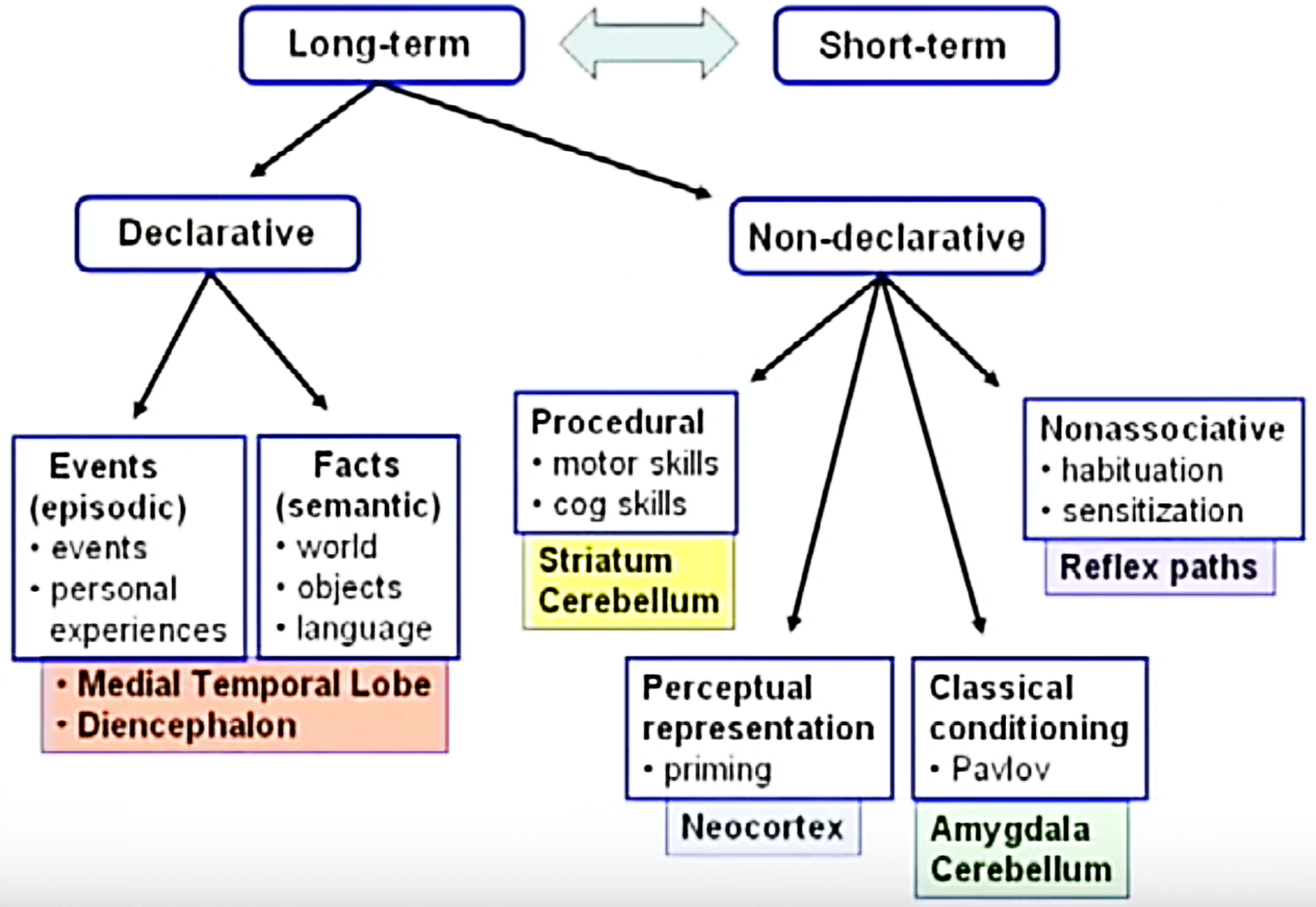
We need to remember that what has just been said applies in general to episodic memory, which, following the old but still valid taxonomy proposed by Larry Squire (2004) (see Figure 1), is a form of declarative memory, and specifically is memory of episodes rather than concepts. As an example, episodic memory involves remembering what one has learned on a specific day, at a specific time, in a specific class, with a specific teacher, in contrast to semantic memory, which is the memory of the conceptual content of what has been learned. Here we are talking about autobiographical memory, which is also a form of declarative memory that entails the distinction between episodic and semantic knowledge. The difference is that it refers to personal experience. The semantic component includes forms of conceptual and factual knowledge such as knowing one’s own gender, name, address, etc. The episodic component refers to what we commonly call “memory.” Episodic memory refers, for example, to remembering going to the theatre with a friend last week on Thursday, or the impression the show left, or how the friend was dressed, or the walk to the theatre etc. So, when we say, “Do you remember when…?” we ask an episodic memory question.
Numerous studies have shown that episodic memory seems to be organized hierarchically (Conway and Pleydell-Pearce 2000, see Figure 2). Remembering, which from now on will be called retrieval to avoid misunderstandings and confusion, is hierarchical. In answering the question “what did you do for Christmas 5 years ago?” one usually intentionally starts the memory search from the general period (5 years ago), goes down to the general event (Christmas celebration) and only after time and effort is one able to retrieve specific elements of the memory, which are temporally activated thanks to the downward spreading of activation of the information from the upper levels. The series of arrows in the following figure describe a typical retrieval. This way of conceiving the structure and organization of knowledge in autobiographical memory is interesting mainly because it focuses on the temporary and transient nature of the detailed content retrieved, which is what we typically call “a memory.”
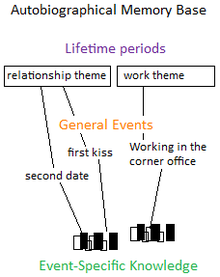
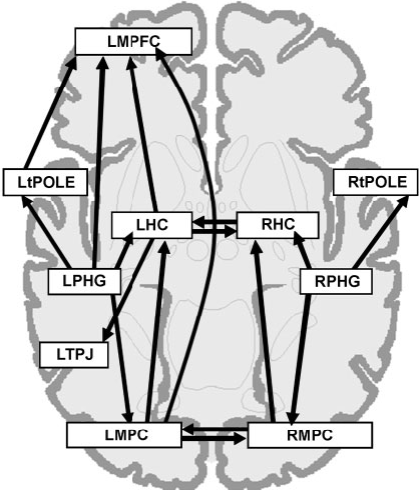
This transient nature implies that what is eventually retrieved in detail depends on what exactly is activated at the upper levels and can thus change any time one retrieves the same memory. This is to say that what I remember (retrieve) from memory about going to the theatre is not always the same. What I will retrieve and report about it tomorrow can even be substantially different from what I retrieved and reported about it today. In other words, this theoretical model underlines the constructive nature of retrieval. The idea that retrieved memories are the result of transient/constructive processes is also implied by the results of many neuroimaging studies on autobiographical memory. As shown in Figure 3, personal memories do not have a single location in the brain. Rather, what is called “memory” is the result of the activation of a highly distributed network of rather disparate and distant brain areas. This autobiographical memory network has been confirmed by many studies and is now well established (see Svoboda et al. 2006 for a meta-analysis). Interestingly, what neuroimaging studies have confirmed is that the autobiographical memory network includes areas that are typically devoted to belief representation, to monitoring/control processes, and to reasoning/inferential processes (left and right frontal areas). Thus, memory is not “just” memory, it involves several other cognitive processes that we are used to studying separately.
Memory is not just memory
Much more is at work in the retrieval of personal memories than simply fishing out existing, clearly represented, detailed information about an experience. We have to take into account that when reporting personal memories one necessarily has to pick and choose which aspects of an event to include and which to leave out. Studies have found that different variables determine that choice (which, in spite of what the term might suggest, does not necessarily occur at a conscious level). These include the level of personal plausibility of the retrieved event (Mazzoni 2007), that is, whether one believes the event really occurred (Scoboria et al. 2004, Scoboria et al. 2014), the degree of fit with current ideas about oneself, and the degree of fit with current goals (e.g., Conway 2005, Mazzoni et al. 2014).
There are basic cognitive processes that take these variables into account. For example, in 1988, Marcia Johnson and collaborators first came up with the idea of a cognitive monitoring process that helps decide whether a memory represents a real event or not (reality monitoring). Subsequently in the same lab this idea was generalized to assume the existence of a broader monitoring system that provides information about the source of the knowledge that is retrieved (Johnson, Lindsay and Hastroudi 1993). This source-monitoring system helps, at an unconscious level, to discriminate between knowledge that has been acquired through direct experience, knowledge that has been acquired through a dream, knowledge that has been acquired thanks to somebody else’s verbal report, or read in a book, etc. Much experimental work has been carried out on this concept, which, in spite of a few problems on a theoretical level, is well established.
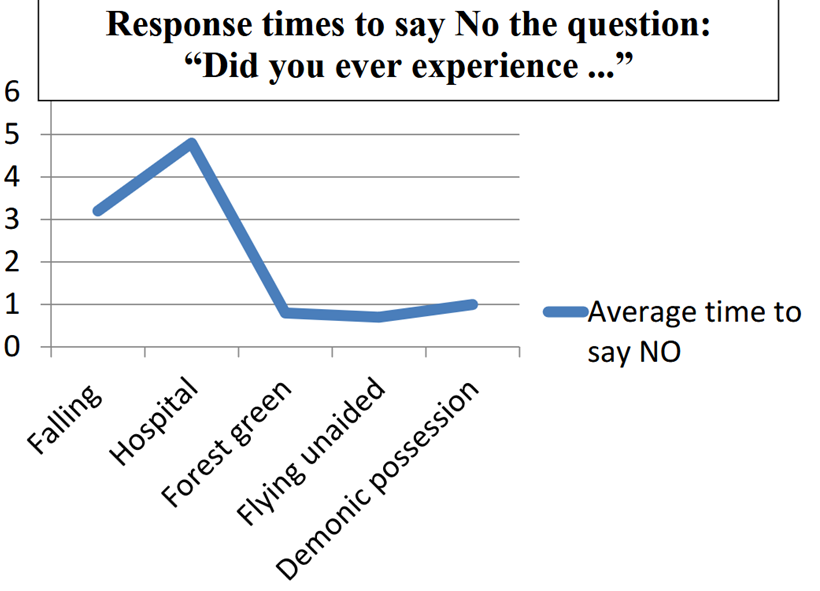
More recently, work has been carried out to understand the role of event plausibility in retrieval. For example, it was found that plausibility sometimes plays the role of a gate for the initiation of retrieval processes. If an event is deemed implausible, people do not even start searching for the memory. The results portrayed in Figure 4 illustrate this phenomenon. When asked to state whether a certain event happened (to them), participants say “no” at different speed. The quickest “no” response (“No, it did not happen to me”) is given to events that are considered totally implausible or impossible, such as one’s body turning an impossible forest green colour, for which one does not even start a memory search (Mazzoni 2007). Certainly, plausibility plays a role in creating mental contents that resemble memories so closely as to trick the monitoring system into believing that they reflect real personal experiences. This phenomenon has been shown a number of times in different laboratories. The higher the degree of personal plausibility of an event, the higher the likelihood of remembering something about it, and believing that it happened. While the series of cognitive processes involved in this are complex and cannot be described in this paper (see Mazzoni and Kirsch 2002), here I would still like to stress the role of monitoring and decisional processes we experience what we call a personal memory.
One necessary component of autobiographical memory is the belief that what we remember is true, that it really happened, and it happened as remembered (Mazzoni and Kirsch 2002, Scoboria et al. 2004). It is clear why this is a crucial component. Consider a situation in which I remember being thrown off a cliff by a friend. If I believe this had happened, such a memory would have major consequences in life, ranging from how one relates to friends to the development of a sense of general distrust, a sense of vulnerability, etc. On the contrary, if one believes it is a dream, and did not happen, the consequences will necessarily be far milder or even inexistent (I do not want to delve into psychodynamic issues here). The belief is fed by evaluations of event plausibility, as already mentioned, and by the result of source and reality monitoring processes. Hence, if a retrieved mental content is plausible in general and if the content is vivid, detailed, emotionally charged, and if the person who remembers has what in psychological jargon is called a “recollective” feeling (i.e., a feeling of reliving the experience, going back in time to the event, see Tulving 1986)—in other words, if “I remember it so well”—then it must be true. The belief in the occurrence of the event is strong and the event is considered to have happened. A mental content, true or false, is considered to reflect personal experience.
The belief thus determines what we might call the “subjective truth” of the memory. Referring in part back to the discussion on the meaning of truth, in a certain way the belief makes a remembered event a true event for the person who holds the belief. In addition, we tend to assume the veridicality of memory. As Aristotle said in his essay on memory and reminiscence, “it is clear that we must conceive […] memory […] to be some such thing as a picture […] a sort of impression of the percept, just as persons do who make an impression with a seal” (Aristotle in Dennis 2013, chapter 1). Accordingly, we remember because we reactivate the impression that the experience made on our cognitive system. This is what we typically believe. If we remember something, and we have a “recollective experience” of it, then it must be true.
However, there are no grounds for such a belief. As Bertrand Russell puts it in the preface to the 1940 book An Inquiry into Meaning and Truth, it reflects what he calls naïve realism: “We all start from naïve realism, i.e., the doctrine that things are what they seem. We think that the grass is green, the stones are hard, and snow is cold” (15). And adding a note of barely hidden disdain, Albert Einstein (talking about Russell in the preface to a subsequent edition of the same book) reminds us of the “plebeian illusion of naïve realism” according to which “things ‘are’ as they are perceived by us through our senses. This illusion dominates the daily life of men and of animals; it is also the point of departure in all of the sciences, especially of the natural sciences” (in Lane and Diam-Lane, 2015 15).
We assume that what we perceive is the reality out there and what we remember must have happened. This is a way of interpreting the world, and our inner world, by creating illusions, reveals its limitations. Perceptual illusions, from the very simple (e.g., the Necker cube, the Mueller-Lyer illusion, the Ponzo illusion) to the more complex (the flickering dots, illusions of movement and the work by the Dutch artist Esher), are well known and reveal the fact that the human cognitive system transforms and, to a certain extent, “creates” and “interprets” the physical stimuli that trigger the sensory system. Lesser known, because studied only since the mid 1990s, are similar examples of memory illusion (e.g., Garry et al. 1996, Loftus and Pickrell 1995, Mazzoni and Loftus 1996, Roediger and McDermott 1995). Memory illusions reveal the same predisposition of the human cognitive system to interpret and create meaningful mental contents.
Memory illusions
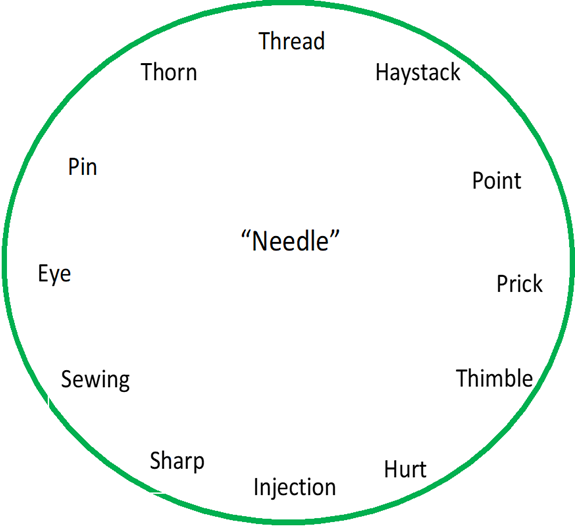
It is common to hear people complain about how much they forget. Indeed, forgetting is considered a flaw, and has been studied since the scientific investigation on memory began. Ebbinghaus in 1885 proposed the Forgetting Curve that plots memory reports against time. The curve is still valid and shows that within a few minutes of the encoding process, approximately half of what has been presented is omitted from a report. Less well-known, and typically considered random irrelevant mistakes are other types of memory errors, errors of commission, when memory reports contain information that has not been presented. Intrusions are an example. Only recently we have discovered that this type of error is systematic and provides important information on how human memory works. An example is the DRM paradigm (first presented in Roediger and Mc Dermott 1995), in which participants are presented with lists of words. During recall, depending on the list, it is possible to predict which memory errors will be made. There is an example in Figure 5. In this particular case, the systematic error is the word “needle” that was not part of the list but was strongly associated with all the words presented. A substantial body of work was developed after the 1990s on this phenomenon that shows how memory is not just memory, but rather the result of associations that trick the monitoring system.
A couple of decades earlier, scholars started studying another source of memory distortion, which has important consequences in forensic practice and is called the “misinformation effect” (probably the first of hundreds of papers on this topic was by Loftus and Palmer 1974). The type of wording and questions used in interrogating witnesses, for example, strongly influences the content of their answers, not just because of compliance, but also because people incorporate erroneous information from the questions and change their memories accordingly (for a view of the debate see McCloskey and Zaragoza 1985, Loftus 2005). This effect can be conceived as a modification of the content of the memory, but it also reflects the role of inferences in memory. The content of a memory report contains not only what has been experienced but also what makes sense and fits plausibly with the experience. If witnesses of a very minor car crash are asked to evaluate the speed of the two cars that “touched each other,” the estimated speed is lower than if they are asked to do the same for the two cars that “crashed into each other” (Loftus and Palmer 1974). Thus, a simple change of wording changes what people report having seen. A recent study on the memory of actions (Ianì, Bucciarelli and Mazzoni 2016; Ianì et al., submitted) in which participants could only see a photo of a person starting to perform an action (e.g., holding a plastic bottle), incorrectly recognized photos that had not been presented, but that were part of the action (e.g., pouring water into a glass). The role of inferences in memory is unanimously accepted, and the result of these inferential processes is reflected in the erroneous but believed-in content of a memory (see Mazzoni and Kirsch 2002).
Not only are memories distorted, but completely false new personal memories are sometimes created. A number of the studies that my collaborators and I have conducted show that people are often convinced of the reality of something that did not in fact occur. In these cases, people not only report these non-existent events as personal experience, but they also create ad hoc memories for them. Suggestive procedures, such as dream interpretation and imagination (Mazzoni and Loftus 1996, Mazzoni and Loftus 1998, Mazzoni and Memon 2003), are effective examples. In a landmark study, we asked participants to imagine for some time a medical procedure that we ascertained does not exist. Once they had imagined it, the participants reported the experience as if it had happened to them. They also created false memories for it. Here is an example of a false memory: “[…] it was a small gray room, and there was a tall blond woman in glasses. I remember my sense of fear. The procedure lasted longer than I expected. There was a strong smell of disinfectant in the room […]” (Mazzoni and Memon 2003). It would have been difficult to identify this statement as a false memory, had we not known in advance how this memory was obtained.
In a different series of dream interpretation studies, we interpreted participants’ recurrent dreams as unequivocally revealing that a specific mildly unpleasant personal experience had occurred before the age of three (0-3 being the period characterized by childhood amnesia). Before our interpretation, the event was said by participants not to have happened. After our interpretation, the majority of participants’ statements showed that they were convinced that the event had happened to them before age three, and some even developed a memory for this inexistent event. These and similar results (false beliefs and false memories have been obtained also after presenting doctored videos, brief narratives, fabricated evidence about rather bizarre and very rare events, etc.) unequivocally show that memory does not just bring back to life something that really happened; rather, it is more like a temporary reconstruction of an experience that makes sense to the person, even if in part or totally untrue. The content of personal memories is clearly malleable and can be easily changed through external manipulation.
One might ask how frequent these false memories occur in everyday life. The answer was provided by another seminal study in which we examined false memories that people still hold on to even if they know they are false (Mazzoni, Scoboria and Harvey 2010). Until 2010 there was only rare anecdotal evidence. For example, the well-known developmental psychologist Jean Piaget remembered for his entire life the time when he was abducted in a park as a child. He remembered the scratches on his nanny’s face and several other details. It was only when Piaget was an adult that the nanny confessed she had invented the story to be able to spend time with her boyfriend. This, however, did not delete Piaget’s memory; he just stopped believing in it. We discovered that these “unbelieved memories” are actually rather common, approximately 25% of the population has at least one. And they are either very mundane (e.g., playing basketball) or very bizarre (e.g., having been chased by a dinosaur). One stops believing in the memory only when some irrefutable contradictory evidence crops up (i.e., impossible conditions; relatives or friends are absolutely certain the event never took place, etc.). But the memory remains and maintains the same “recollective” qualities of a real memory (i.e., the ability to relive the experience, to travel back in time to that moment, etc.) (see also Scoboria et al. 2014). The existence of these unbelieved memories reveals that our personal story is made not only of real experiences but also of experiences that never took place. It also reveals that a personal memory is seldom completely accurate (in the sense of not containing errors). Why is this so? How come we hold dear memories of inexistent events?
Why false memories?
The reason why we have false memories is very simple: they are the result of the way the cognitive system works, the by-product of an otherwise very successful system that helps us negotiate life. Once again, the autobiography we have in our minds (the representation of personal experiences) is not made up of videos or pictures that we can retrieve in their entirety. It is rather the result of several selective processes that extract and abstract the information about the experience during encoding, and delete and add elements during retrieval in order to make sense of the experience. The content of the memory is already “interpreted” after encoding. And more “interpretation” (we have talked about inference, for example) occurs during retrieval. The result is a “memory” content that is successful in making sense of the experience, in which inconsistent information tends to be lost and gaps filled with congruent knowledge. To give an example, this happens when a witness who believes that the majority of crimes are committed by black people (mis)remembers the criminal as being black, even if s/he was unable to see the person who committed the crime.
Why then does the mind/brain behave in this way? The mind can be conceived basically as a probabilistic machine that interprets the environment, using available and accessible information that is already present in it, and easily accessible, as well as information that is (truly or apparently) relevant, that has just been presented, etc. (See for example, Gopnick and Wellman 2011; for critics see Bowers and Davies 2012). This conception of the way the cognitive system works also fits relatively nicely with an evolutionary approach, according to which brains “evolved to survive in a world in which objects that mattered to the survival had the specific characteristics that the brains could grasp” (Dawkins 410). Similarly, human memory has a function as long as it grasps what is necessary. What is necessary for the human being is to maintain a positive identity. A number of cognitive biases serve this very function. We have an optimistic bias, which makes us overconfident about many aspects of ourselves, a bias that cannot be explained solely in terms of intentional self-deception or wishful thinking. We simply evaluate personal events, actions, and behaviour as more positive than they are. A positive self-image is not only the modal interpretation of oneself; it is necessary for one’s wellbeing. Rigid self-representation is akin depression, even mimicking the same brain activity of depressed patients (see for example, Sperduti et al. 2013). Some researchers even claim that complete accuracy in self-evaluation is a marker of depression. Thus, the cognitive system is geared towards positive self-representation through biases such as the consistency bias that leads us to rewrite our past feelings and memories so that they resemble what we feel and believe now (Schacter 1999), and the egocentric bias that makes us remember the past in a self-enhancing manner. Some of these biases are nicely illustrated by Travis and Aronson in a book with a revealing title, Mistakes Were Made (But Not by Me) (2007), in which the authors discuss the universal tendency to attribute to others bad decisions made in the past.
Conclusion
Do we, then, lie to ourselves? Of course we do. And, after what I have written in this article, it seems to me that we lie out of necessity. Do we intend to deceive ourselves? Of course not. Lying is simply part of the way the human cognitive processes work. We lie to ourselves because we need to make sense of our past using all information available. The inaccuracy of personal memories is the result of this need to make sense and interpret personal experience. In addition, memory illusions are the necessary by-product of the normal functioning of the cognitive system—necessary because they provide positive self-representation and guarantee continuity, consistency and stability to our personal histories and narratives. These essential characteristics of personal history and identity come at a cost: the complete accuracy of personal memories. But if we want to negotiate our lives successfully, the price, in my opinion, is worth paying.
Works Cited
- Allport, Gordon W. Becoming: Basic Considerations for a Psychology of Personality. New Haven: Yale UP, 1943.
- Blackburn, Simon and Keith Simmons. Truth. New York: Oxford UP, 1999.
- Blum, Susan D. “Five Approaches to Explaining ‘Truth’ and ‘Deception’ in Human Communication.” Journal of Anthropological Research 61:3 (2005): 293-315.
- Bowers, Jeffrey S. and Colin J. Davis. “Bayesian Just-So Stories in Psychology and Neuroscience.” Psychological Bulletin 138:3 (2012): 389-414.
- Carson, Thomas L. Lying and Deception: Theory and Practice. Oxford Scholarship Online, Sept 2010. Web. 17 December 2017 <http://www.oxfordscholarship.com/view/10.1093/acprof:oso/ 9780199577415.001.0001/acprof-9780199577415>
- Conway, Martin A. “Memory and the Self.” Journal of Memory and Language 53:4 (2005): 594-628.
- Conway, Martin A. and Christopher W. Pleydell-Pearce. “The Construction of Autobiographical Memories in the Self-Memory System.” Psychological Review 107:2 (2000): 261-288.
- Dawkins, Richard. The God Delusion. New York: Houghton Mifflin, 2008.
- Dennis, Wayne E. Readings in the History of Psychology. 1948. East Norwalk, CT: Amber Books, 2013.
- Ebbinghaus, Herbert. “Ueber das Gedaechtnis.” Mind 10:39 (1985): 454-459.
- Erikson, Erik H. Childhood and Society (2nd ed.). New York: Norton, 1950.
- Fromm, Erich. The Sane Society. New York: Rinehart, 1955.
- Garry, Maryanne, Charles G. Manning, Elizabeth F. Loftus and Stephanie J. Sherman. “Imagination Inflation: Imagining a Childhood Event Inflates Confidence that It Occurred.” Psychonomic Bulletin and Review 3:2 (1996): 208–214.
- Gopnik, Alison and Henry M. Wellman. “Reconstructing Constructivism: Causal Models, Bayesian Learning Mechanisms, and the Theory Theory.” Psychological Bulletin 138:6 (2012): 1085-1108.
- Gramigna, Remo. “Augustine on Lying: A Theoretical Framework for the Study of Types of Falsehood.” Sign Systems Studies 41:4 (2013): 446–487.
- Ianì, Francesco, Monica Bucciarelli and Giuliana Mazzoni. “The Role of Kinematic Mental Simulation in Creating False Memories”. Journal of Cognitive Psychology 30:28 (2018): 296-306.
- Helm, Sarah. “Boris Johnson Has Just Launched His Latest Euro-Myth.” The Independent, June 27 2016. Web. 19 December 2017 <https://www.independent.co.uk/voices/why-are-we-so-surprised-that-boris-johnson-lied-when-he-s-been-sacked-for-lying-twice-before-a7105976.html>
- Johnson, Marcia K. and Carol L. Raye. “Reality Monitoring.” Psychological Review 88:1 (1981): 67-85.
- Johnson, Marcia K., Shahin Hashtroudi and D. Stephen Lindsay. “Source Monitoring.” Psychological Bulletin 114:1 (1993): 3-28.
- Koriat, Asher and Morris Goldsmith. “The Correspondence Metaphor of Memory: Right, Wrong, or Useful?” Behavioral and Brain Sciences 19:2 (1996): 211-228.
- Lane, David C. and Andrea Diam-Lane. Quantum Weirdness: Einstein vs. Bohr. MSAC Philosphy group, Mount St. Antonio College print (2014).
- Loftus, Elizabeth F. “Planting Misinformation in the Human Mind: A 30-Year Investigation of the Malleability of Memory.” Learning and memory 12 (1996): 361-366.
- Loftus, Elizabeth F. and John C. Palmer. “Reconstruction of Automobile Destruction: An Example of the Interaction Between Language and Memory.” Journal of Verbal Learning and Verbal Behavior 13:5 (1974): 585-589.
- Loftus, Elizabeth F. and Jacqueline E. Pickrell. “The Formation of False Memories.” Psychiatric Annals 25 (1995): 720-725.
- Maslow, Abraham H. “Self-Actualizing People: A Study of Psychological Health.” Personality, Symposium 1 (1950): 11-34
- Mazzoni, Giuliana. “Did you Witness Demonic Possession? A Response Time Analysis of the Relationship Between Event Plausibility and Autobiographical Beliefs.” Psychonomic Bulletin and Review 14:2 (2007): 277-281.
- Mazzoni, Giuliana. Psicologia della testimonianza. Roma: Carocci Editore, 2011.
- Mazzoni, Giuliana and Irving Kirsch. “Autobiographical Memories and Beliefs: a Preliminary Metacognitive Model.” Ed. Timothy Perfect and Bennett Schwartz. Applied Metacognition. Cambridge: Cambridge University Press, 2002: 121-145.
- Mazzoni, Giuliana and Elizabeth F. Loftus. “When Dreams Become Reality.” Consciousness and Cognition 5 (1996): 442–462.
- Mazzoni, Giuliana. “Dreaming, Believing, Remembering.” Ed. Joseph Rivera and Timothy R. Sarbin. Memory, Trauma, Dissociation and Hypnosis Series. Believed-In Imaginings: The narrative Construction of Reality. Washington, D.C: American Psychological Association Press, 1998. 145-156.
- Mazzoni, Giuliana. “Dream Interpretation Can Change Beliefs about the Past.” Psychotherapy 35 (1999): 177-187.
- Mazzoni, Giuliana and Amina Memon. “Imagination Can Create False Memories.” Psychological Science 14:2 (2003): 186-188.
- Mazzoni, Giuliana, Alan Scoboria and Lucy Harvey. “Non-Believed Memories.” Psychological Science 21:9 (2010): 1334–1340.
- Mazzoni, Giuliana, Manila Vannucci and Elizabeth F. Loftus. “Misremembering Story Material.” Journal of Criminological and Legal Psychology 4 (1999): 93-110.
- Mazzoni, Giuliana, Andrew Clark and Robert Nash. “Disowned Recollections: Denying True Experiences Undermines Belief More than Memory.” Acta Psychologica 145 (1999): 139-146.
- McCloskey, Michael and Maria Zaragoza. “Misleading Postevent Information and Memory for Events: Arguments and Evidence Against Memory Impairment Hypotheses.” Journal of Experimental Psychology: General114:1 (1999): 1-16.
- Politifact (online website). Web. 20 December 2017. <www.politifact.com>
- Reilly, Dolman. Cartoon. The New Yorker, Feb 9, 1998.
- Roediger III, Henry L. and Kathleen B. McDermott. “Creating False Memories: Remembering Words Not Presented in Lists.” Journal of Experimental Psychology: Learning, Memory, and Cognition 21:4 (1995): 803-814.
- Russell, Bertrand. An Inquiry on Meaning and Truth. William James Lectures, 1940. Hove: Psychology press, 1995.
- Sackeim Harol A. and Ruben C. Gur. “Self-Deception, Self-Confrontation, and Consciousness.” Ed. Davidson, Richard J., Gary E. Schwartz and David Shapiro. Consciousness and Self-Regulation. Advances in Research and Theory. Vol 2. Springer, Boston, 1978. 139-197.
- Schacter, Daniel L. “The Seven Sins of Memory: Insights from Psychology and Cognitive Neuroscience.” American Psychologist 54:3 (1999): 182-203.
- Scoboria, Alan, Giuliana Mazzoni, Irving Kirsch and Mark Relyea. “Plausibility and Belief in Autobiographical Memory.” Applied Cognitive Psychology 18:7 (2004): 791-807.
- Scoboria, Alan, Dennis L. Jackson, Jennifer Talarico, Maciej Hanczakowski, Lauren Wysman and Giuliana Mazzoni. “The Role of Belief in Occurrence within Autobiographical Memory.” Journal of Experimental Psychology: General 143:3 (2014): 1242-1258.
- Squire, Larry. “Memory Systems of the Brain: A Brief History and Current Perspective.” Neurobiology of Learning and Memory 82:6 (2004): 171-177.
- Stanford Encyclopaedia of Philosophy. “The Definition of Lying and Deception.” Thu Feb 21, 2008; substantive revision Fri Dec 25, 2015. Web. 17 December 2017 <https://plato.stanford.edu/entries/lying-definition/>.
- Stanford Encyclopaedia of Philosophy. “The Correspondence Theory of Truth.” Fri May 10, 2002; substantive revision Thu May 28, 2015. Web. 17 December 2017. <https://plato.stanford.edu/entries/truth-correspondence/>.
- Taylor, Shelley E. and Jonathan D. Brown. “Illusion and Well-Being: A Social Psychological Perspective on Mental Health.” Psychological Bulletin 103:2 (1988): 193-210.
- Travis, Carol and Elliot Aaronson. Mistakes Were Made (but Not by Me). Orlando: Harvest Book, 2007.
- Trivers, Robert. Natural Selection and Social Theory: Selected Papers of Robert Trivers. Oxford: Oxford UP, 2002.
- Tulving, Endel. “Episodic and Semantic Memory: Where Should We Go from Here?” Behavioral and Brain Sciences 9:3 (1986): 573-577.
- Turri, Angelo, Turri, John. “The Truth About Lying.” Cognition, 138 (2015): 161–168.
- Svoboda, Eva, Margaret C. McKinnon and Brian Levin. “The Functional Neuroanatomy of Autobiographical Memory: a Meta-analysis.” Neuropsychologia44:12 (2006): 2189-2208.
- Varden, Helga. “Kant and Lying to the Murderer at the Door… One More Yime: Kant’s Legal Philosophy and Lies to Murderers and Nazis.” Journal of Social Philosophy 41:4 (2010): 403–421.
- Warren, Cortney S. Lies We Tell Ourselves: The Psychology of Self-Deception. Sivierville, TN: Insight Publishing Co., 2014.
- Wood, Allen. Kantian Ethics. New York: Cambridge UP, 2007.
About the author(s)
Biographie : Giuliana Mazzoni est spécialiste de la mémoire humaine et de sa malléabilité. Actuellement Professeure des Universités à l’Université de Rome, La Sapienza, elle était précédemment titulaire de la chaire de neuroscience et de psychologie à l’Université de Hull au Royaume Uni. Elle a publié 170 articles scientifiques, 8 ouvrages et de nombreux chapitres dans des ouvrages collectifs. Elle a reçu diverses bourses de recherche, au Royaume-Uni, au Canada, en Espagne et au Portugal. Ses travaux sont régulièrement mentionnés dans les médias à travers le monde.
Biography: Prof. Giuliana Mazzoni is an expert in human memory and memory malleability. Currently full Professor at the University of Rome, La Sapienza, she previously held the Chair in Neuroscience/Psychology at the University of Hull (UK). Her publications include 170 scientific articles, 8 books, and chapters in edited books. She has been awarded numerous grants in the UK, Canada, Spain, and Portugal. Her work has been featured in various media worldwide.