“The Energy of the Miracle:” Charles Bukowski and Classical Music
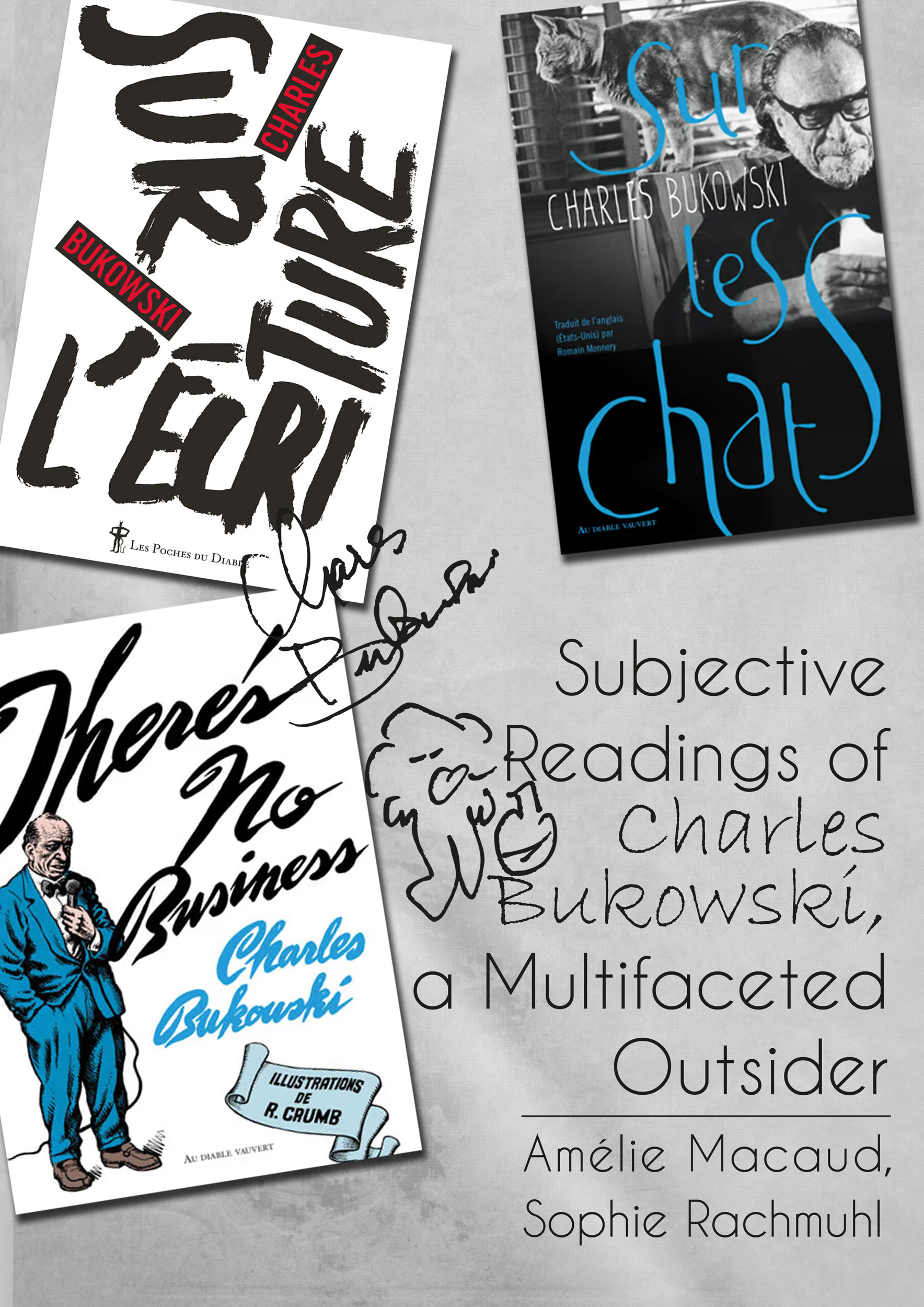
Abstract: This essay seeks to explore the influence of classical music on Bukowski’s life and work, concentrating on specific composers including Tchaikovsky, Wagner, Mahler, Handel and Shostakovich.
Keywords: Charles Bukowski, Music, Schopenhauer, Wagner, Bruckner, Bukowski’s methods of composition
Résumé : Cet essai tend à explorer l’influence de la musique classique dans la vie et l’œuvre de Charles Bukowski. Il se concentre principalement sur l’impact de compositeurs spécifiques comme Tchaikovsky, Wagner, Mahler, Handel et Shostakovich.
Mots-clés : Charles Bukowski, Musique, Schopenhauer, Wagner, Bruckner, Méthode de composition de Bukowski
Charles Bukowski was asked by editor Daniel Halpern to contribute to an issue of a literary magazine devoted to music and Bukowski responded on February 20, 1993:
On your issue on music, if I write anything relating to that I’ll certainly submit it for a look. Music (classical) has helped get me through. I have never written anything without the radio on to classical music. (it’s on now). I listen to from 2 to 5 hours of music a night. It’s a grand habit, clears the muck out of me. And the magic thing is, that even after decades and decades of listening, I will sometimes hear a piece that I have never heard before and it’s bold and marvelous and adventuresome, chilling, the chills run up my arms and down my back. There is an immense lore of awesome and startling music out there. It appears to me that, somehow, music has attracted the greatest souls. Literature, on the other hand, has only had a very few who could do it well. Or so I feel. The painters, sculptors, are in between. But the musicians give us the true juice, the roar of life. It’s all very strange but it is so. (Reach for the Sun 283-84)
From his first published story “Aftermath of a Lengthy Rejection Slip” in 1944 to his final works of the early nineties, Bukowski over five decades made classical music a central part of his creative life. In “observations on music” from Sifting Through the Madness for the Word, the Line, the Way, Bukowski declared: “music is the most passionate of the art forms; / I wish I had been a musician or a composer” (95). Listening to classical music was an essential part of Bukowski’s writing ritual which also included drinking wine, beer, or spirits, and smoking tobacco. In the act of listening and writing, Bukowski often attains a state of flow, he experiences “goosebumps,” which allows him surcease from suffering. “Wir haben die Kunst, damit wir nicht an der Wahrheit zugrunde gehen” declared Friedrich Nietzsche, and Charles Bukowski made his own variation on Nietzsche: “The difference between Art and Life is that Art is more bearable.” Bukowski was also–like Friedrich Nietzsche whose The Birth of Tragedy was written under the heady influence of Richard Wagner–a Dionysian in his awareness of and sensitivity to the primal power of music. Music allowed him communion with other great souls. In this essay I shall explore Bukowski’s experience of classical music which is “bold and marvelous and adventuresome, chilling, the chills run up my arms and down my back… awesome and startling music” (Reach for the Sun 283-84). I shall discuss his stories “Aftermath of a Lengthy Rejection Slip,” “Hard Without Music,” and the poems “The Life of Borodin,” “My German Buddy,” and “2 a.m.”
Bukowski sought moments of clarity and peace, when the war all the time was at a truce, momentary times of living in the NOW. This sense of unity with the world and himself came through music. Composers take a heroic sand against meaninglessness and failure. Bukowski also drew and painted; thus art, literature, and music were all central to his life from the beginning. Often, he would compose his poetry while listening to music, and the composers and music are incorporated within the poem as he is writing it. He becomes a witness and participant in the music as it flows on and he records the physical and interior sensations he experiences while listening. In his letter to Halpern, Bukowski revealed that “the musicians give us the true juice, the roar of life.” This experience is something I have had, and I am sure many music lovers have had, which is a visceral, bodily, quasi- “spiritual” or “mystical” reaction to great music. All this testimony of praise confirms what many music lovers report; that upon hearing music they sometimes experience a sense of timelessness, of flow, of a sense of unity between self and cosmos, of being “carried away.” The struggles of life are momentarily resolved and one feels a sense of exhilaration or ecstasy—literally in Greek ek-stasis, or “standing outside one’s self.” Under the spell of music, “goose bumps” may arrive, powerful, visceral reactions occur in the physical body, the thrilling sensation of one’s skin trembling in a pleasurable glow. The hairs stand erect in a reaction known as piloerection and dopamine-induced chills appear in response to the rhythms, harmonies, melodies, polyphony, and surprises as the music unfolds. There is controversy concerning what precisely these physical and emotional reactions might signify. Skeptics argue that the meaning lies solely in the firing of chemicals such as dopamine which are aroused in our brains by “flight or fight” instinctive, biological reactions, while others suggest—as a character in the final pages of Aldous Huxley’s novel Point Counter Point argues concerning the power of the late string quartets of Beethoven—that our profound bodily, psychological, and uncanny responses to great music prove the existence of God.
Bukowski’s first published short story, “Aftermath of a Lengthy Rejection Slip,” is a comical tale in which the narrator meets a visiting literary man who he thinks is Whit Burnett, the famous editor of Story magazine, but it turns out at the surprising conclusion that he is actually an insurance man (Calonne 29-31). The other character is a lady named Millie whom the narrator describes as a “woman of ill-fame.” He tells her:
“But Millie, Millie, we must remember art. Dostoevsky, Gorki, for Russia, and now American wants an Eastern European. America is tired of Browns and Smiths. The Browns and Smiths are good writers but there are too many of them and they all write alike. America wants the fuzzy blackness, impractical meditations, and repressed desires of an Eastern European” (“Aftermath” 2)
The narrator then plays a recording of Tchaikovsky’s Sixth Symphony for the man he believes is Burnett and says: “’I want you to notice […] the section which brings forth the marching movement in this symphony. I think it’s one of the most beautiful movements in all music. And besides its beauty and force, its structure is perfect. You can feel intelligence at work” (“Aftermath” 6).
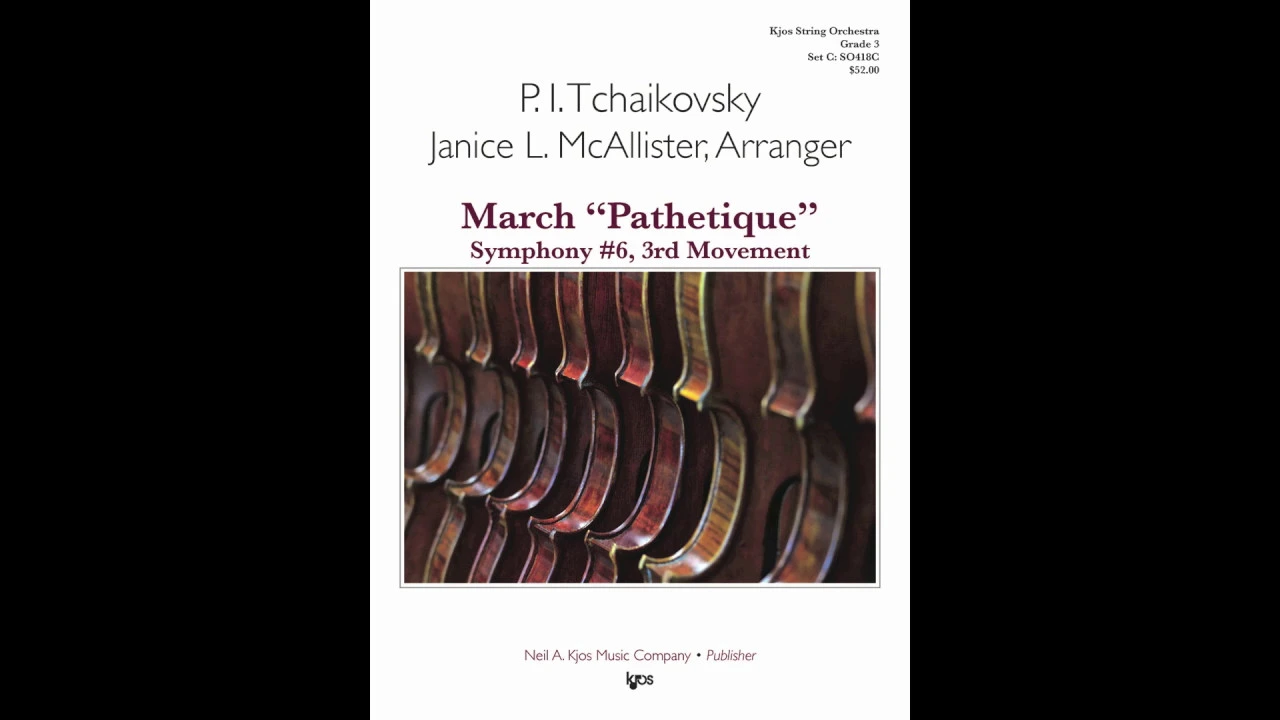 Consulter la ressource en ligne ▶
https://www.youtube.com/watch?v=FY4fV77SZAk&ab_channel=KjosMusicPublishing
Thus “Aftermath” is significant for the first introduction of the classical music theme and for his emphasis of “beauty and force,” characteristics which Bukowski will emphasize repeatedly in his later works. It is also a humorous story, which demonstrates that Bukowski could explore his relationship to so-called “serious” music—the other term sometimes employed in place of “classical”—with a light and comical touch.
“Hard without Music”, published two years later in Matrix in 1946 depicts a young man named Larry who, because he needs money, is selling his record collection to two nuns. Sister Celia (Saint Cecilia is the patron saint of music) arrives at his apartment and tells him: “You have such good taste. Almost all of Beethoven, and Brahms, and Bach” (“Hard Without Music” 16). Larry then begins an extended speech, describing how in third grade “the teacher stepped with her ethereally ponderous and magnificent, her rimless glasses, her white wig and Fifth Symphony, were no more a real part of life than the rest of it… Mozart, Chopin, Handel… The others learned the meaning of the little black dots with tails, and without tails, that climbed up and down the chalk-marked ladders on the blackboard. But I—through fear and revulsion—turtle fashion, withdrew my mind into the dark shell” (“Hard” 17). In school as a boy, Larry did not conceive of music as any “more a real part of life than the rest of it,” associating perhaps his teacher with her “ponderous and magnificent […] rimless glasses” with elitism and snobbery against which he rebelled. This is an interesting passage, for Larry— like Bukowski—did not learn to read musical scores: “the little black dots with tails” (the individual notes) and “the chalk-marked ladders” (the treble and bass staff) and “withdrew my mind into the dark shell.” His approach to music will not be through the technical knowledge of music theory, but rather through the visceral, primal sensitivity of his “mind” which like a turtle withdraws itself into the “dark shell” of his own interiority.
Larry’s appreciation of music is gradual as he declares:
“Good music crept up on me. I don’t know how. But suddenly, there it was and I was a young man in San Francisco spending whatever money I could get feeding symphonies to the hungry insides of my landlady’s wooden, man-high victrola. I think those were the best days of them all, being very young and seeing the Golden Gate Bridge from my window. Almost every day I discovered a new symphony… I selected my albums pretty much by chance, being too nervous and uncomfortable to understand them in the glass partitions of the somehow clinical music shops… There are moments, I have found, when a piece, after previous listening that were sterile and dry… I have found that a moment comes when the piece at last unfolds itself fully to the mind…”
“Yes, how true,” said Sister Celia.
Then comes Larry’s ecstatic speech celebrating the inwardness of listening:
“You are listening haphazardly, carelessly. And then, through the lazy sheen you have effected, almost upon the sheen, climbing upon it, through it, entering lithely upon the unguarded brain… in comes the melody, curling, singing, dancing… All the full potency of the variations, the counter notes, gliding cool and utterly unbelievable in the mind, In the kindness it is… like the buzzing of countless little steel bees whirling in every-heightened beauty and knowing… A sudden movement of the body, an effort to follow, will often kill it, and after a while you learn this… You learn not to kill music. But I guess that’s what I’m doing now, isn’ t it?” (“Hard” 17-18)
The language here is mysterious—“and through the lazy sheen you have effected”—Bukowski, I believe, is trying to suggest a mood of passive receptivity, the sheen that covers the “unguarded brain”. Here Bukowski describes a “peak experience,” a moment of joyous immediacy in which the “steel bees” bear a honeyed sensation of ecstasy. “Heightened beauty and knowing”—the aesthetic experience of symmetry, control and order which great music presents—is balanced by “knowing,” an interior gnosis which cannot be described with words. Larry sells the records for thirty-five dollars and in his poem “albums” from The Night Torn Mad with Footsteps, he explains how he would buy records and then trade them back to the store: “But I remember the record shop / where you could actually trade 3 used albums for 2… I drank and listened / until / each note and musical phrase / on those albums / became part of me / forever” (Night Torn 38). Finally, the title “Hard Without Music” reveals that indeed, after having to part with his precious records, life is difficult to experience without the healing balm of music.
During the fifties, Bukowski continued to include composers and music in his writings, turning to another Russian composer, Alexander Borodin in his poem “The Life of Borodin” first published in Quicksilver in 1958 and later collected in Burning in Water, Drowning in Flame (1974). A clue to where Bukowski’s obtained his knowledge about music occurs in Post Office:
I happened to be up on my classical music because it was the only thing I could listen to while drinking beer in bed in the early morning. If you listen morning after morning you are bound to remember things. And when Joyce had divorced me I had mistakenly packed 2 volumes of The Lives of the Classical and Modern Composers into one of my suitcases. Most of these men’s lives were so tortured that I enjoyed reading about them, thinking, well, I am in hell too and I can’t even write music. (75)
This book most likely is Encyclopedia of the Great Composers and Their Music, by Milton Cross and David Ewen since I was unable to locate a book entitled The Lives of the Classical and Modern Composers and the Cross and Ewen book is indeed in two volumes. Bukowski in “The Life of Borodin” quotes directly from Cross and Ewen who note:
During the carnival of 1887 Borodin attended a dance at the Medical Academy, decked out in a national costume. He was exceptionally gay, and even participated in the dancing and the merrymaking. Suddenly he collapsed. When his friends realized that he was not clowning they rushed to him, but it was too late; they found that he had died of a burst aneurism. (114)
Bukowski’s poem concludes: “in 1887 he attended a dance / at the Medical Academy / dressed in a merrymaking national costume; / at last he seemed exceptionally gay / and when he fell to the floor, / they thought he was clowning. / the next time you listen to Borodin, / remember…” (Burning in Water 19). When one considers the lives of many of the great composers—Beethoven’s deafness, Mozart’s burial in a pauper’s grave, Schubert’s early death, Mahler’s tragic love story with Alma, Borodin’s difficulties—one understands Bukowski’s identification with a composer who meets the criteria of the “tortured artist” archetype. The authors and philosophers Bukowski admired including Fyodor Dostoevsky, Friedrich Nietzsche, Arthur Schopenhauer, Louis-Ferdinand Celine, Knut Hamsun, Antonin Artaud and many others were also often isolated, agonized, brooding and existential figures who were unable and unwilling to adapt to “normal society.”
Bukowski continued his intense connection to classical music during the 1960s, writing on December 11, 1966 to Douglas Blazek: “They are going to play me a little Bruckner later my radio tells me, so I will feel better… Bruckner, then there’s Wagner without the words, and Mahler… the long dark stuff hits the core” (Screams from the Balcony 279). On the first page of Notes of A Dirty Old Man, Bukowski describes getting into a fist fight with his “buddy Elf”—“… and as the Elf came up I had the bottle, good scotch, and I got him half on the jaw and part of the neck under there and he went down again, and I felt on top of my game, I was a student of Dostoevski and listened to Mahler in the dark…” (9) Just as Mahler’s music is an example of “the long dark stuff” which “hits the core,” so too Bukowski listens to him in the “dark” and furthermore, Mahler is paired with Dostoevski, another “dark” Russian or “Eastern European” as we saw with Tchaikovsky in “Aftermath of a Lengthy Rejection Slip.” The word “dark” recurs in Bukowski’s descriptions of specific compositions. For example, “a little dark Bach organ music” (Screamsfrom the Balcony 169). In “classical music and me,” Bukowski declares that Richard Wagner is “a roaring miracle / of dark energy” (The Last Night of the Earth Poems 372). The great composers such as Wagner go to the dark core of the meaning of life. An important aspect of Bukowski’s relationship to the music of Wagner is that he prefers “Wagner without the words.”
Bukowski has read Arthur Schopenhauer who addressed the power of music in Die Welt als Wille und Vorstellung—variously translated as The World as Will and Idea, or The World as Will and Representation—in the Third Book, Chapter 52:
Hence all of them [the arts other than music] objectify the will only indirectly, in other words, by means of the Ideas. As our world is nothing but the phenomenon or appearance of the Ideas in plurality through entrance into the principium individuation is (the form of knowledge possible to the individual as such), music, since it passes over the Ideas, is also quite independent of the phenomenal world, positively ignores it, and to a certain extent, could still exist even if there were no world at all, which cannot be said of the other arts. Thus, music is as immediate an objectification and copy of the whole will as the world itself is, indeed as the Ideas are, the multiplied phenomena of which constitutes the world of individual things. Therefore, music is by no means like the other arts, namely a copy of the Ideas, but a copy of the will itself, the objectivity of which are the Ideas. For this reason the effect of music is so very much more powerful and penetrating than is that of the other arts, for these others speak only of the shadow, but music of the essence. (257)
For Bukowski as for Schopenhauer, music is the highest art for it moves beyond words and powerfully expresses the “Will.” As Peter B. Lewis has noted, music
achieves this effect precisely because it bypasses the Ideas, which are manifestations of the Will, and directly exhibits the Will itself. By not copying things in the perceptible world, but relying entirely on the resources of musical sounds alone, music is able to give immediate expression to the striving, surging, pulsing, driving force of the Will, the inner nature of all things. For this reason, music acts directly on the listener’s will. (115)
This is why Bukowski virtually never mentions opera favorably—I cannot think of one example, actually—for the human voice got in the way of the direct experience of instrumental music and reminded him of what he disliked: human beings. Here again Schopenhauer provides the clue and rationale in his Essays and Aphorisms where he listed his objections to opera:
The mass and the symphony alone provide undisturbed, fully musical enjoyment, while in opera the music is miserably involved with the vapid drama and its mock poetry and must try to bear the foreign burden laid on it as best it can… In general, however, grand opera, by more and more deadening our musical receptivity through its three-hours duration and at the same time putting our patience to the test through the snail’s pace of what is usually a very trite action, is in itself intrinsically and essentially boring; which failing can be overcome only by the excessive excellence of an individual achievement: this is why in this genre only the masterpieces are enjoyable and everything mediocre is unendurable. (163-64)
Opera for Schopenhauer weighs down the purity of music with its interminable length and “with the vapid drama and its mock poetry.” According to this argument, opera therefore prevents the direct experience of sublimity that instrumental music provides. Bukowski describes this Schopenhauerian pure “high” that music as the vital expression of the “Will” can give us in one of his most extensive poems on the subject, “classical music and me.” Bukowski states that George Frideric Handel “created things that / take your head and lift it / to the ceiling” (Last Night of the Earth Poems 372) Emily Dickinson said, “If I read a book and it makes my whole body so cold no fire can ever warm me, I know that is poetry. If I feel physically as if the top of my head were taken off, I know that is poetry. There are the only ways I know it. Is there any other way?”2 and Bukowski’s image of his head being lifted to the ceiling describes the primal, visceral power of great music. Handel’s Concerto Grosso Op. 6, no. 4 in A minor, third movement, Largo e piano, is in the soundtrack of Barfly, which is the filmscript Bukowski created for the director Barbet Schroeder (1986). In the film, we hear the movement of strings climbing stately, sweetly, slowly as Hank’s car goes up hill to Tully’s place3.
Another composer who gave Bukowski “goose bumps” was Richard Wagner who is featured in several poems. Wagner, Mahler, Bruckner, Sibelius, Shostakovich—all wrote dramatic, big orchestral works with “dark,” intense, large climaxes and sublime slow movements. In “1813-1883”—the dates of Wagner’s birth and death—Bukowski declares: “yes, Wagner and the storm intermix with the wine as / nights like this run up my wrists and up into my head and / back down into the gut / some men never / die / and some men never / live / but we’re all alive / tonight” (You Get So Alone 13).
 Consulter la ressource en ligne ▶
https://www.youtube.com/watch?v=H3mqWPn1Vwo&ab_channel=UChicagoMusic
Here as in several of his composer poems, things “mix together”—one experience, one mood jostles another into existence: Wagner’s music, the storm outside and the wine he is drinking combine to create a peak experience which again is registered physically by the body as storm, wine and music “run up my wrists and up into my head and back down into the gut.” The poem makes a full circle from the arms and hands with which he is writing the poem, into his head, his brain, his mind, and “back down into the gut.” The music hits him in the stomach, in his vital organs, the solar plexus, where he lives.
In a second poem devoted to Wagner, “my German buddy,” Bukowski describes himself drinking “malt liquor from / Thailand” as he listens to Wagner. The experience is so intense that he believes Wagner must be actually alive in the house with him “and he is / of course / as I am taken by the sound of / him / and little goosebumps / run along / both of my arms / then a / chill / he’s here / now” (The Last Night of the Earth Poems 22). Bukowski addresses Richard Wagner directly, and erases the gap between death and life, for although the great composer is dead, he lives through his music “and he is, of course” still alive through the power of his art. Bukowski then turns to the moment of ecstasy as “little goosebumps / run along / both of my / arms / then a / chill.” As in his letters and other writings, the “chill’ is the description of the encounter with the sublime, both infinite and terrifying in its awesomeness. And Wagner literally returns from the dead, appearing with Bukowski as he listens in the present: “he’s here now.”
Bukowski admired not only the “dark,” Romantic composers, but also Baroque masters such as G.F. Handel and Johann Sebastian Bach. For Bukowski, “Bach is the hardest to play badly because he makes so few spiritual mistakes” (Sifting, “observations on music” 94). Bach creates “palaces of sound” (Sifting, “burning, burning” 259). In a 1971 interview, Bukowski demonstrated that he listened carefully to J.S. Bach and appreciated him more than “dance music” like The Rolling Stones:
the dance music is OK to start off on but it just goes so far and then you’re ready for something more. I learned that one week when I was way out there and I sat down in the dark and listened to Bach, the same piece, over and over again. About the hundredth time it dawned on me. He had all those melodies going, one over the other. He started off with the basic, then he came in with the second, and a few bars later with the third, and the fourth—I said he couldn’t do any more. He just kept going, right on up to ten melodies I think it was. (Sunlight Here I Am 65)
We note again that Bukowski—as with Mahler—listens to the music “in the dark,” thus communing in a respectful, quiet, silent, intense way with the composer. Bukowski learned to appreciate Bach’s genius at counterpoint, his ability to write fugues in which many individual melodies are placed together to achieve astonishing polyphony.
And Bach exists in the NOW. This linking of the present moment with the feeling that the poet is literally with the composer also occurs in Bukowski’s poem “Bach”: “Bach and I are / in this / room / together. / his music now / lifts me beyond / pain / and my / pathetic /self- / interest. / Bach, thanks to you, / I have no / living / friends” (Bone Palace Ballet 357). As with his poem about Handel, the music again “lifts” him, curing him of his “pain,” and allowing him to rise above his depression and sense of lostness in his “pathetic / self- / interest.” And there is a further complexity in the final verses for he claims that is due to Bach’s sublimity that he has “no / living / friends.” There is a double meaning here, for Bukowski would rather spend time with J. S. Bach than with any “friends,” and furthermore none of these “friends” is as alive, vital, energetic, thrilling and moving as this supposedly dead composer: Bach is still alive NOW with the poet, as is Wagner. This is a theme which recurs throughout Bukowski’s writings about music: that the composer, the poet, the artist is fully alive, while many people are half-dead or completely lifeless in their meaningless, robotic existences. Bukowski returns to this “now” motif in the poem “a moment” (Bone Palace Ballet 360). Bukowski now describes the power of Richard Wagner’s genius.
Wagner provides the counterpoint to another event in which the internal world merges with the external as both the “glorious” cat and the music of Wagner are “impossible” in their sublimity. Again, the experience of the sublime music is “frightening and / wonderful,” the music combining with daily events as the poet is in the process of composing his poem.
This desire to merge with the composer recurs in “Hungaria, Symphonic Poem #9 by Franz Liszt.” Bukowski reveals that he always listens to classical music while typing and that even though he has “to write one hundred bad poems to get one good / one,” it is the composers he has to thank: “(and when I finally write a good poem / I’m sure they have much to do with / it).” Bukowski is again with Liszt NOW (The Flash of Lightning 234-35).
Bukowski is moved by Liszt as he has been by Wagner. Bukowski desires to express in his poem the music itself, to become part of the music: “I feel like hugging the radio to my chest so / that I can be part of the music.” He repeats “now” three times: “I am listening to a composer now”; “and write it / into this poem / now”; “now the music is finished.” He weaves in again the experiences of daily life: instead of drinking Thai malt liquor, or his cat leaping on his desk, now it is the gas bill which must be paid. The counterpoint between the details of everyday life on planet Earth and the sublime immeasurability of the cosmos to which great music leads us appears in all these poems: Bukowski writes about music in the eternal present.
Finally, Shostakovich’s 10th Symphony in E Minor in four movements inspired Bukowski’s poem “2.a.m,” one of his greatest uncollected late poems, published in the June 1991, Vol. 2, No. 3 issue of The New Censorship. 2 am is the time when the bars closed in Los Angeles and the poem begins: “the time they used to run me out of the West coast / bars / but now I am / listening to / Shostakovich’s Tenth / which has about everything / needed to keep you / going / against the dung / tide” (“2 a.m.” 12). Bukowski turns to the past when the bars closed, the bars “used to run me out.” However, in the Tenth Symphony of Shostakovich, Bukowski finds a “home,” a shelter from the hostile streets, from the isolation of his beleaguered life. In music, he again finds the cure: “Shostakovich’s / Tenth, / 2 a.m. closing / time / but not here / tonight, / Dmitri spins / it out / and I borrow from his / immense psyche, / I feel better and better / and better / listening to him, / he cures me onward, / each drink / finer, / my stupid wounds / closing, / the Tenth goes on / circling these / walls” (“2 a.m.” 13). Bukowski carefully uses the word “closing” with two different meanings: the closing time of the bars at 2 am and the ways Shostakovich’s great music has “closed” or put an end to his suffering: “my wounds are closing.”
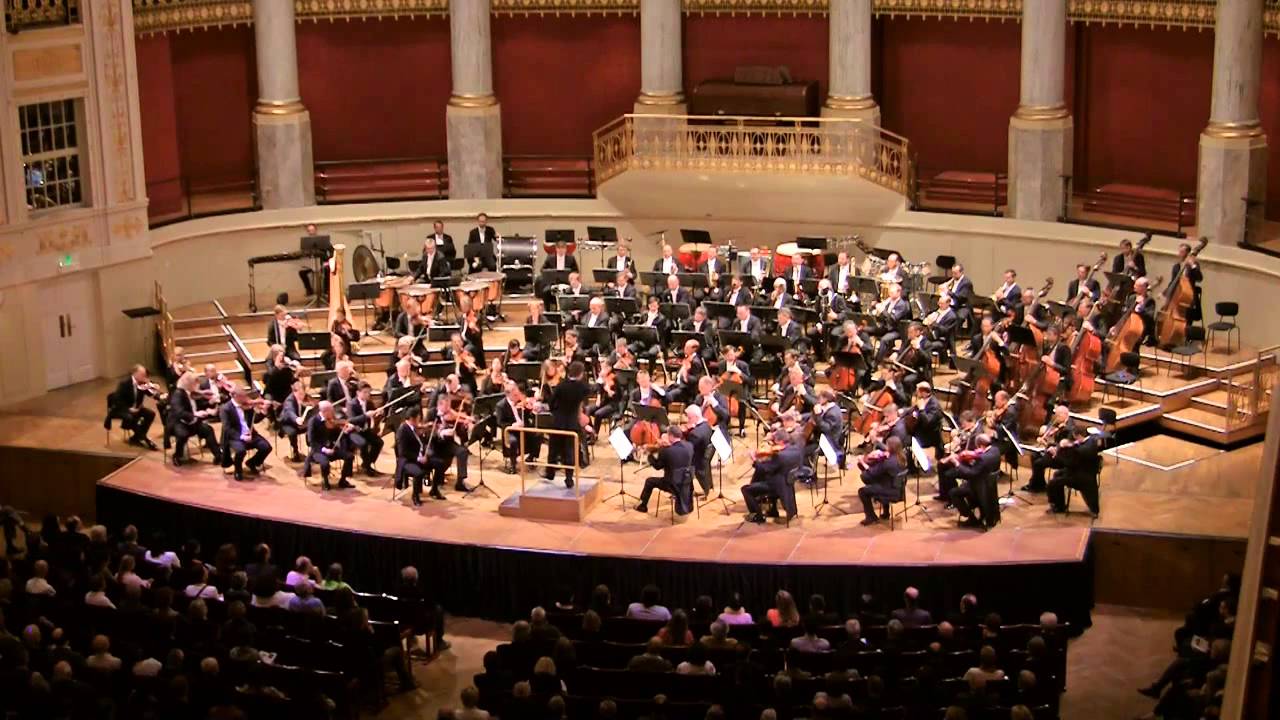 Consulter la ressource en ligne ▶
https://www.youtube.com/watch?v=bBl_W8euSFQ&ab_channel=WienerKonzerthaus
The poet then turns to the present moment—as in Bukowski’s earlier poems devoted to classical music—as the music has ended: “this is so much / better than it / used to be, / that old / 2 a.m. / shut out from / the mirror / and the 250 / bottles of glass, / unused, / walking through / the alone / night, / murdered again. / once /more” (“2 a.m.” 14).
The mirror he is shut out from is not only the mirror at the bar in back of the many bottles of alcohol in which he can see his reflection, but the mirror which allows him to perceive his own identity wholly. Bukowski’s own sense of self in childhood was distorted and mangled by his brutal father who beat him regularly for the smallest supposed “infractions” of his ridiculous “rules.” So, he was compelled to find a new mirror or create one’s own which perhaps the artist might be said to be doing in creating a work of art. Now as he listens to Shostakovich, he is no longer exiled and alone, but rather is complete and fulfilled, a moment when he is momentarily free of pain as “the Tenth goes on / circling these / walls.” Here again is the encounter of the act of writing the poem with the chance experience of meeting the music as it unfolds. As Bukowski declared, when he listened to music: “I have a radio—no records—and I turn that classical music station on and hope it brings me something I can align with while I’m writing” (Sunlight Here I Am 99). Bukowski “aligns” with Shostakovich: music both accompanies, initiates, and synchronizes a mood, partially already there, partially brought into being by the music. Indeed, the music “circles” him and he becomes part of it. “Dmitri spins / it out / and I borrow from his / immense psyche.” There is a unity of listener, music, and composer. This is an experience often related by musicians, a feeling of “flow” or unity of self with the music.
Finally, in his last prose writings, Bukowski returned yet again to a consideration of the role music played in his life and writing as we discover in The Captain Is Out to Lunch and the Sailors Have Taken Over the Ship:
With people, all I found were the living who were now dead—in books, in classical music… Classical music was my stronghold. I heard most of it on the radio, still do. And I am ever surprised, even now, when I hear something strong and new and unheard before and it happens quite often. As I write this I am listening to something on the radio that I have never heard before. I feast on each note like a man starving for a new rush of blood and meaning and it’s there. I am totally astonished by the mass of great music, centuries, and centuries of it. It must be that many great souls once lived. I can’t explain it but it is my great luck in life to have this, to sense this, to feed upon and celebrate it. I never write anything without the radio on to classical music. It has always been a part of my work, to hear this music as I write. Perhaps, someday, somebody will explain to me why so much of the energy of the Miracle is contained in classical music? I doubt that this will ever be told to me. I will only be left to wonder. Why, why, why aren’t there more books with this power? What’s wrong with the writers? Why are there so few good ones? (131-32)
Here again, Bukowski feels that most humans are not alive: “They congeal within themselves, kid themselves, pretending to be alive” (131). He must turn to literature and to music to find “the living who were now dead.” And Bukowski turns to music for sustenance, for food, rather like Gregor Samsa in Franz Kafka’s Die Verwandlung, The Metamorphosis (1915), who, having been changed into an insect, strains to hear his sister Grete play the violin: “Was he an animal that music so seized him? For him it was as if the way to the unknown nourishment he craved was revealing itself to him” (132). And Bukowski laments that literature cannot reach the heights of music and that there are not “more books with this power.”
Among American writers, it would be difficult to find another figure as immersed and devoted to classical music as Charles Bukowski. Indeed, as we have seen, classical music played a central role in his prose and poetry from the very beginning of his career to his last works. Bukowski agreed with Walter Pater who famously said “All art aspires to the condition of music.” (1893) Bukowski was also in the tradition of German philosophy, of Friedrich Nietzsche and Arthur Schopenhauer, who saw music as a Dionysian expression of the pure Will. Bukowski often listened to music while composing poetry and relied on the chance encounter of his mood with the unfoldment of the music to direct him as he followed the thread of his poem to its conclusion. Bukowski also saw music as a route towards transcendence and as one of the ways he employed to cope with the slings and arrows of outrageous fortune. As he wrote, the radio was always on, connecting him to the higher, vital, alive, and replenishing forces of the cosmos as incarnated in the works of the great classical composers.
Notes
- 1Excerpts from the music discussed in the article will be provided in the footnotes when available online; this excerpt is from “March ‘Pathetique’ Symphony #6, 3rd Movement SO418C” by Pyotr I. Tchaikovsky (1893), arranged by Janice L. McAllister, with the Kjos String Orchestra in 2019: https://www.youtube.com/watch?v=FY4fV77SZAk&ab_channel=KjosMusicPublishing
- 2Emily Dickinson letter to Thomas Wentworth Higginson, 1870.
- 3The excerpt from Barfly (1h17min-1h18min45) can be found following this link: https://www.youtube.com/watch?v=DjTPEGR4FyU&ab_channel=natj0002
- 4An excerpt from Ride of the Valkyries (from Die Walküre) performed by the University of Chicago Symphony Orchestra during their 2021 Hallowing Concert is accessible on the YouTube UChicagoMusic page: https://www.youtube.com/watch?v=H3mqWPn1Vwo&ab_channel=UChicagoMusic
- 5An excerpt from Symphony n°10 in E minor, op.93 by Dmitri Shostakovich, performed by Krzysztof Urbański on April 25, 2014 at the Grosser Saal of the Wiener Konzerthaus, is accessible on the Wiener Konzerthaus YouTube page: https://www.youtube.com/watch?v=bBl_W8euSFQ&ab_channel=WienerKonzerthaus
Works Cited
- Bukowski, Charles. “Aftermath of a lengthy Rejection Slip,” in Portions from a Wine-Stained Notebook: Uncollected Stories and Essays, 1944-1990, ed. David Stephen Calonne. City Lights, 2008.
- Bukowski, Charles. Bone Palace Ballet: New Poems. Black Sparrow Press, 1997.
- Bukowski, Charles Burning in Water Drowning in Flame, Selected Poems 1955-1973. Black Sparrow Press, 1974.
- Bukowski, Charles. The Captain Is Out and the Sailors Have Taken Over the Ship. Black Sparrow Press, 1998.
- Bukowski, Charles. The Flash of Lightning Behind the Mountain: New Poems. Ecco, 2004.
- Bukowski, Charles. “Hard Without Music,” in Absence of the Hero: Uncollected Stories and Essays, Volume 2, 1946-1992, ed. David Stephen Calonne. City Lights, 2010.
- Bukowski, Charles. The Last Night of the Earth Poems. Black Sparrow Press, 1992.
- Bukowski, Charles. The Night Torn Mad with Footsteps: New Poems. Black Sparrow Press, 2001.
- Bukowski, Charles. Notes of a Dirty Old Man. City Lights, 1969.
- Bukowski, Charles. Post Office. Black Sparrow Press, 1971.
- Bukowski, Charles. Reach for the Sun: Selected Letters 1978-1994, Volume 4, ed. Seamus Cooney. Black Sparrow Press, 1999.
- Bukowski, Charles. Screams from the Balcony: Selected Letters 1960-1970, ed. Seamus Cooney. Black Sparrow Press, 1993.
- Bukowski, Charles. Sifting Through the Madness for the Word, the Line, the Way. Ecco, 2003.
- Bukowski, Charles. Sunlight Here I Am: Interviews and Encounters, 1963-1993, ed. David Stephen Calonne. Sun Dog Press, 2003.
- Bukowski, Charles. You Get So Alone Sometimes It Just Makes Sense. Black Sparrow Press, 1986.
- Bukowski, Charles. “2 a.m.” in The New Censorship, June 1991, Vol. 2, No. 3.
- Calonne, David Stephen. Charles Bukowski. Reaktion Books, 2012.
- Cross Milton, and David Ewen. Encyclopedia of the Great Composers and Their Music in Two Volumes. Doubleday, 1953.
- Lewis, Peter B. Arthur Schopenhauer. Reaktion Books, 2012.
- Pater, Walter. The Renaissance : Studies in Art and Poetry. The Project Gutenberg. [online] https://www.gutenberg.org/files/2398/2398-h/2398-h.htm
- Schopenhauer, Arthur. Essays and Aphorisms, trans. R.J. Hollingdale. Penguin, 1981.
- Schopenhauer, Arthur. The World as Will and RepresentationVolumeI, trans. E.F.J. Payne. Dover Publications, 1969.
- Schroeder, Barbet. Barfly. 1986 https://www.youtube.com/watch?v=DjTPEGR4FyU&ab_channel=natj0002
About the author(s)
Biographie : David Stephen Calonne est l’auteur de Charles Bukowski (London : Reaktion Books, 2012) et a édité des collections de prose et de nouvelles inédites pour City Lights Books à San Francisco. Il a publié des livres consacrés à la Beat Generation et a enseigné à l’université du Texas, à l’université du Michigan, à l’université de Chicago, et enseigne actuellement à l’Eastern Michigan University.
Biography: David Stephen Calonne is the author of Charles Bukowski (London: Reaktion Books, 2012) and has edited collections of Bukowski’s uncollected prose and short fiction for City Lights in San Francisco. He has published several books on the Beat Generation and has taught at the University of Texas, the University of Michigan, the University of Chicago and presently teaches at Eastern Michigan University.