Andrew Wyeth (1917-2009): Deconstructing the Art of Self-Portraiture
Abstract: This article tackles the genre of self-portraiture in the art of figurative American
painter Andrew Wyeth (1917-2009). Even though Wyeth’s prolific career lasted seven
decades, only four paintings officially entitled “self-portrait” by the artist exist.
The last acknowledged self-portrait, The Revenant—even if its title doesn’t mention the word “self-portrait”—was painted in 1949. Then,
until his death in 2009, Wyeth crafted a very personal and intimate genre of self-portraiture,
that we could describe as “deconstructed self-portraits”.
First, we will define the genre of self-portraiture (a sub-category of portraiture),
which is a portrait of an artist realized by the artist himself or herself, mainly
through the medium of painting, drawing, sculpture or photography, traditionally recognized
as both a recording and a reconstruction of the artist’s physical appearance. Then,
we will analyze the evolution of the genre from an art historical perspective, but
also within the framework of social psychology that establishes three approaches to
the representation of the self. To finish, we will wonder why Wyeth chose (consciously
or not) to shun literal self-depictions and only created metaphorical images of himself.
Wyeth explained that some of these images had a profound metaphorical and personal
meaning, they also betray the artist’s tense subjectivity. While visually deconstructing
himself and conveying a larger meaning of what an artist’s identity can be, Wyeth
also questioned the art of self-portraiture. We will thus explore this particular
interest in pushing the limits within the genre and within his own psyche.
Keywords: Andrew Wyeth, American painting, American realism, Figurative painting, Self-portraiture
Résumé : Cet article se propose d’étudier le genre de l’autoportrait dans l’art du peintre
figuratif américain Andrew Wyeth (1917-2009). Malgré une carrière extrêmement prolifique
de plus de soixante-dix ans, Wyeth n’a peint que quatre tableaux officiellement intitulés
« autoportrait ». Wyeth réalisa le tout dernier d’entre eux, The Revenant en 1949. Même si le genre de l’autoportrait n’est pas clairement indiqué dans le
titre, Wyeth a déclaré à maintes reprises qu’il était bien l’homme figurant sur le
tableau. Puis jusqu’à sa mort en 2009, Wyeth élabora un genre extrêmement personnel
et intime que nous pourrions définir comme des « autoportraits déconstruits ».
Nous nous attacherons dans un premier temps à étudier le genre de l’autoportrait (en
tant que sous-catégorie du genre du portrait), défini traditionnellement comme le
portrait d’une artiste par elle-même, principalement au travers de supports, tels
que la peinture, la photographie, le dessin ou la sculpture, qui représente et reconstruit
à la fois l’apparence physique d’une artiste. Dans un second temps, nous analyserons
l’évolution du genre dans une perspective relative à l’histoire de l’art, et également
grâce au cadre théorique de la psychologue sociale qui établit trois approches concernant
la représentation de soi. Pour finir, nous nous interrogerons sur les motivations
(conscientes ou inconscientes) qui ont poussé l’artiste à rejeter toute forme de représentation
littérale de lui-même et à se représenter uniquement sous forme d’images à caractère
métaphorique. Wyeth a souvent insisté sur le sens profondément intime et métaphorique
de ces images qui trahissent la subjectivité problématique de l’artiste. Tout en déconstruisant
sa propre image et en proposant une représentation complexe et fragmentée de l’identité
d’un artiste, Wyeth a également interrogé plus largement le genre de l’autoportrait,
dans le cadre de la tradition artistique et comme forme d’expression culturelle codifiée,
propre à chaque époque.
Mots-clés : Andrew Wyeth, Autoportrait, Peinture américaine, Réalisme américain, Peinture figurative
Introduction
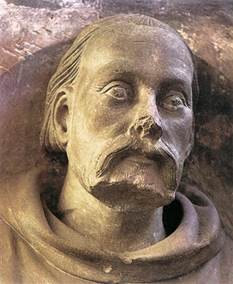
According to art historian, Ernst Gombrich, self-portrait emerged in the early Renaissance era,1 as an offshoot of the art of portraiture developed by 14th century masters who started to paint, as he puts it, “likenesses from nature” (161). Among a series of busts representing benefactors of the Cathedral of Prague, the German sculptor and imperial architect, Peter Parler the Younger (1330-1399), placed a life-sized bust of himself among the other portraits, which Gombrich describes as “in all probability the first real self-portrait of an artist known to us” (215).
A few decades later, in 1433, Jan van Eyck (1390-1441) painted Portrait of a Man (Self-Portrait?), which is admittedly the world’s first painted self-portrait2: “No other portraits of him survive to confirm his appearance, but the painting looks like a self-portrait: the sitter is craning forward slightly as if looking in a mirror, and the piercing blue eyes gaze in slightly different directions, as if the artist were concentrating on each in turn” (nationalgallery.org).3
Yet, Van Eyck’s alleged self-portrait and timid strategy in term of self-representation (indeed, the artist couldn’t or wouldn’t refer to himself in the title) was brushed aside in grand manner by Albrecht Dürer (1471-1528) who, when he “signed his famous self-portrait4 with his imposing monogram ‘D’ in 1500 […] did not just finish a masterwork, but set the foundation for a quite persistent cultural phenomenon: the phenomenon of self-depiction” (Carbon 1). To make sure that his message was as straightforward as possible, Dürer added a Latin inscription to the right of his head: “I, Albrecht Dürer of Nuremberg, portrayed myself in everlasting colors aged 28 years.” As Carbon explains: “based on the still-existing artworks, the 15th century seems to be a rough estimation of the point at which self-portraits became a general subject of art history. This was not only done for the sake of having an image of their own, but to express a certain state of their own to others, to the public” (3). Art historians, and semioticians alike, agree on the fact that a self-portrait is both a recording and a reconstruction of the artist’s appearance, which means that things aren’t as simple as they seem, even with early self-portraits.
If we now turn to 20th century American painter Andrew Wyeth (1917-2009), whose career spanned seven decades, only four self-portraits (paintings entitled “self-portrait”) were officially considered as such by the artist. He made one self-portrait in oil paint, the first one when he was eighteen, Self-portrait at 18 in 1935, and the second one Self-portrait in 1938, after switching to tempera,5 the major stylistic turn of his career. The third one, Self-portrait, painted in 1945, pictures him outdoors, and the last one (The Revenant, even if the title doesn’t mention the word “self-portrait”) was painted in 1949. Then, until his death in 2009, Wyeth crafted a very personal and intimate genre of self-portraiture that could be described as ‘deconstructed self-portraits,’ but he only painted four of these. It is extremely surprising for a figurative artist to circumvent such an established genre. As a comparison, Rembrandt (1606-1669)—was recently nicknamed “The Dutch Master of Selfies” by Zuzanna Stańska—created nearly 100 self-portraits over a span of 40 years.6 The earliest one shows him as a young man in his early twenties, and he produced the last one in the year of his death at the age of 63.7 Even if we cannot deny the autobiographical aspect of this pursuit, Hall insists that these paintings belong to the category created by Dürer in the 1500 self-portrait: “they allude constantly to the history of self-portraiture, inserting the artist into the roll call of great artists” (150).
Similarly, if we compare Wyeth’s self-portrait production with Edward Hopper’s (1882-1967), another famous American master, it appears that Hopper drew and painted numerous self-portraits in his early years as an artist—for example the two 1903-1906 Whitney Museum Self-Portrait (on view) and Self-Portrait (not on view)—even if most paintings remained unfinished during the mature phase of his career.8 So, why is it that some artists, mostly old masters, seem to crave the attention earned through self-depiction while other, more contemporary, artists betray some form of reluctance toward the genre?
This question might be answered with a quotation from W. Ray Crozier and Paul Greenhalgh, who convincingly argue that:
The self-portrait will have different meanings for people at different times. Wider social and economic changes lead, on the one hand, to changes in the concept of self and in the significance of appearance, and these are reflected by changes in portraiture. On the other hand, they lead to changes in the role and self-conception of the artist, and these are evident in the rise in popularity of the self-portrait and in the decline of the portrait. (Crozier and Greenhalgh 30)
Early theories of the self-portrait
Crozier and Greenhalgh’s theory of self-portraiture considers the genre within the framework of social psychology9 and examines “three approaches to the self: self-presentation theory, social constructionist theory, and self-awareness theory” (29) and they will help us shed light on the evolution of the genre and understand better its distorted and intimate meaning for a painter like Andrew Wyeth.
First of all, the concept of self-presentation may be defined in terms of those aspects of a person’s behavior that are designed to influence the impressions that other people will form of that person. Dürer’s motive in the 1500 Self-Portrait with Fur-Trimmed Robe was self-presentation in the form of an artistic statement (Crozier and Greenhalgh 30). Carbon explains that “until the Renaissance era, painters—artists in general—did not have a specific prestige, because the separation of craftsman and artist had not been solidly established yet” (5). In this highly symbolic self-portrait, Dürer pictures himself as the Salvator Mundi, showing patrons and fellow artists that he is a “Christ-like” artist, with “divine powers of creation” (Hall 84). Erwin Panofsky also explains that this bold artistic gesture stages a more personal and profound shift in Dürer’s aesthetics:
The Munich Self-Portrait marks that crucial point in Dürer’s career when the craving for “insight” began to be so all-absorbing that he turned from an intuitive to an intellectual approach to art, and tried to penetrate into the rational principles of nature. At this stage of his development his concept of the “Christ-like” artist seemed to be best prefigured in the impersonal clarity and calm of a hieratic image such as the Salvator Mundi. (Panofsky 43)
This striking artistic statement conveys a radical perception and representation of the artist as “supremely fertile and versatile thinker” (Hall 84). Carbon insists on the major shift in self-portraiture that was provoked by this painting: “With Dürer, the ingenious ‘Renaissance man,’ the true and pure artist with the aura of a superstar, entered the Northern hemisphere” (5). Similarly, Hall explains that this image contributed to the development of “the idea of the artist as a cultural hero” (75) in the 1490s. Rembrandt’s self-portraits are more difficult to categorize strictly, yet, Hall admits that “Many of his early self-portraits do mark themselves out as images of a particularly ‘inspired’ artist” (151), and thus fall into this category as well. Secondly, social constructionist theory is more specifically adapted to self-portraiture in the centuries following Dürer’s statement, since a different stance towards the self is taken: the sitter’s appearance becomes conventional and reveals their role and status (Crozier and Greenhalgh 31). As far as Rembrandt was concerned (and Van Eyck as well, for that matter), representing his own self was an obligation, as for most other painters at that time. As Joanna Woods-Marsden explains, Renaissance artists started to represent a painted image of themselves to illustrate “the concept of the constructed self” (10). Social construction was their main objective since “To succeed at court […] the aspiring artist had to create for himself a suitably persuasive persona, or social mask” (Smith 354). For instance, Van Eyck’s objective was to convey the idea of a prosperous individual through his ostentatious clothing (his flamboyant red hat—or chaperon—was a fashionable headdress for affluent men in the fifteenth century), but at the same time not a member of the upper nobility. His family were considered as members of the gentry, but he remained an employee who was paid a handsome salary as court painter to Philip the Good, Duke of Burgundy. Likewise, Rembrandt’s 1635 Self-Portrait with Saskia—his wife, Saskia, was the daughter of the mayor of Leeuwarden—contributed to promote him socially and through a number of orders he became a wealthy man, as shown five years later in the 1640 National Gallery of London Self-Portrait. The museum description insists on the socially constructed aspect of the image:
We see the artist in confident pose–self-assured, dressed in expensive-looking fur and velvet, his hat laced with jewels. But, though he is a Dutchman living in the 1640s, Rembrandt is wearing the clothes of a gentleman of the 1520s and his pose is based on paintings by Dürer, Titian and Raphael from a similar date. So, as the subject of the painting, Rembrandt is portraying himself as a Renaissance gentleman, and as the artist he is both paying homage to and directly comparing himself with the most famous artists of that time. (nationalgallery.org)
In this specific case, the social construction element is obvious. Rembrandt represented himself as a social persona and a member of a prosperous elite. However, some remanent features of the self-presentation theory remain since he also visually stresses that he is a renowned painter as worthy of praise as his famous peers.
A more contemporary approach to self-portrait
Crozier and Greenhalgh’s last category, the self-awareness theory seems more adapted to a contemporary shift in self-portraiture, in which modern artists create pictures reflecting the experience of their own personality or individuality through heightened self-perception. This new approach to the representation of the self gradually replaced self-presentation and social constructionist theories over the course of the eighteenth century, a very specific moment when, according to Hall, self-portraiture staged “the artist ‘torn by contrary passions,’ from the high seriousness of Reynolds and Barry, to the demonic comedy of Zoffany, Messerschmidt, Goya and Denon” (185).
If we analyze Edward Hopper’s 1925-30 self-portrait, no visual indexes can help the viewers connect him to his craft or assess how successful his career might be. The painting is clearly oriented toward introspection, but no “passion” is at play here. According to Erika Doss, Hopper’s self-portraits are quintessentially American and connected to the 1950s:
Hopper’s enduring appeal relates to his visualization of modern American feeling and, in particular, his navigation of an “emotional regime” that governed twentieth-century American life. Hopper’s brooding and restrained pictures embody an emotional style that surfaced around 1900, flourished through the 1950s, and remains an iconic representation of modern American character, now vanished. (3)
Hopper depicts himself as a middle-aged American and not a major artist,10 which emphasizes the psychological intensity of his self-portrait.
Wyeth, on the other hand, belonged to a younger generation of artists (he was born in 1917, Hopper in 1882) that has often been associated with Magic Realism,11 a movement expressing an existential anguish in the war and post-war years. David Anfam calls this generation of 1940s and 1950s painters the “disinherited spirits” in the “so-called age of anxiety”:
Theirs amounted to a home-grown brand of art with an existential twinge. Fields of empty space and comparable devices that imply the erasure, transcendence or isolation of human consciousness (whether entrapped or liberated) populate the paintings of George Tooker, Jared French, Bernard Perlin, Robert Vickrey, Walter Stuempfig, Ben Shahn and Andrew Wyeth. […] Magic realism also ran parallel to Rothko’s evocation of states of consciousness in scenes of individual solitude and confinement […]. (Anfam 76-77)
Andrew Wyeth’s Self-Portrait at 18 falls into the category of self-awareness theory. He uses a traditional pose, yet looks defiantly at himself in a mirror, which explains why his head is represented in three quarter profile. However, he strangely decided to blur his left eye, thus emphasizing his right eye’s piercing gaze, which produces an unsettling effect on the viewer. When familiar with context, viewers may decide that the young artist decided to attract attention to his body’s most important element: his eyes. Young Wyeth chose a theatrical background, a window with an opaque billowing curtain, filtering the daylight and creating a harsh contrast between light and shadow in the painting. This image uncannily (taking into account the fact that he was just 18) establishes windows as a recurring topos in the following 70 years of his career. This self-portrait is thus more staged and riddled with interpretive signs than Hopper’s restrained image, yet it still conforms to the traditional codes of the self-awareness genre of self-portraiture.
The 1938 Self-Portrait and 1945 Self-Portrait are even more standard examples. The 1938 self-portrait signals a major technical shift in Wyeth’s career, which rendered this painting even more special to the artist. At only 21 he was an expert watercolorist, praised by the New York art scene, with several sold-out solo shows. Yet, he started to experiment with tempera painting, a medium which allowed him to obtain the smooth, translucent surface in this painting, and which quickly replaced oil painting in his major works. The world-famous Christina’s World painting is an egg tempera.
The 1945 painting re-uses ancient visual codes dating back to self-portraiture as social construction. Andrew Wyeth establishes himself as an artist in a straightforward manner, depicting himself as a spirited young man walking briskly in the countryside and holding an art portfolio. A few elements betray the notion of self-awareness, such as his somber expression, the gloomy palette consisting mostly of earth tones, and an ominous crow on the left in the distance.
As for The Revenant, 1949, it is the last painting qualifying as one of Andrew Wyeth’s early self-portraits. This image heralds a conceptual shift in the way he would handle the traditional categories of self-portraiture from then on. And it is also his last mimetic self-portrait. Here, he “challenges the viewer […] to probe into [his] elusive, often ambiguous creative vision and imagery” (Wolff 91). The tempera painting shows a three quarter length image of the artist who seems to be dissolving into an ethereal light. We notice the same blurry left eye as in the Self-Portrait at 18. If we take into account Wyeth’s outstanding artistic capabilities (indeed, painting his left eye wasn’t a technical challenge for him) we can argue that he re-used this motif on purpose, to stress its metaphorical content. Art historians often associate Wyeth with transcendental philosophy. As Barbara Novak puts it: “At his best, Wyeth’s patient concern with the thing is also a twentieth-century extension of luminist transcendentalism, of that Emersonian juncture of the real and the ideal” (1980, 232). Moreover, in numerous books and interviews, he repeatedly fantasized about becoming Emerson’s “transparent eyeball.”12
This painting also stages a more mature artist questioning the genre of self-portraiture, while walking the thin line between “self-fashioning and self-knowledge” (Smith 355). This last self-portrait was the perfect opportunity to make an intimate statement about his creative process, which required a form of dissolution of the self to connect with Novak’s concept, the “thing,” and turn it into an aesthetic object.
Metaphorical self-portraits
However, from then on, Wyeth shied away from literal self-depictions and created metaphorical images that he either associated with representations of the self, or which were interpreted as covert representations of himself. This very peculiar category of metaphorical self-portraits, which soon became a topos in his art, started in 1951, when he pictured himself as a pair of boots in Trodden Weed. The official narrative is that, in 1950, the artist had to undergo surgery, and during the operation, his heart stopped beating. He later told the story of a near-death experience in which he saw German Renaissance painter, Albrecht Dürer, “a medieval figure, handsome, almost princely in his furs, moving toward him across the tile hospital floor” (Meryman, Secret Life 33). This ghostly apparition had such a strong effect on him that he later represented his own feet, clad in high antique leather boots that he was wearing to take invigorating walks during his recovery period. These boots had belonged to American illustrator Howard Pyle,13 with whom he also felt a strong artistic connection. The antique medieval-looking boots re-connect the convalescing artist with two major figures of his private artistic pantheon: Dürer’s “patient concern with the thing” (see Novak) and Howard Pyle’s taste for dramatic effects. From a semiotic perspective, these boots belong to the category that Anne Classen Knutson defines as Wyeth’s “inanimate objects—metaphors that viewers would not otherwise decipher” (53).14 As Wolff explains, “the exacting, down-to-earth naturalism of his paintings can be deceptive. Who would suspect […] that the intriguing but otherwise quite ordinary-looking Trodden Weed is actually a self-portrait, and that it was intended to represent death indiscriminately crushing life underfoot?” (93). The boots in Trodden Weed also fall into the more general category of “vessels,” which, according to Knutson, “function recurrently in Wyeth’s work as symbols of mourning” (66).
In 1981, Wyeth admitted that the extremely puzzling tempera entitled Dr. Syn was a self-portrait painted in the aftermath of another surgical episode. Theodore E. Wolff describes the image as one of the moments when Wyeth “ventured into the fantastic” (92). The skeleton is wearing an ornate naval jacket that had—once again—belonged to Howard Pyle15 and sitting on a stool in the watchtower of a lighthouse. Taylor explains: “Wyeth didn’t use the old studio skeleton […] as the model for Dr. Syn, but instead used an x-ray of his own body.16 That disconcerting fact turns the painting into a traditional memento mori, as Wyeth, with cannon at his side, sits staring out to sea facing his own mortality” (Taylor 40).
After that in 1984, Wyeth painted Breakup that Knutson describes as “a still life in the landscape of the artist’s disembodied hands” (55). It represents a bronze sculpture of Wyeth’s hands,17 surfacing out of an ice block floating on the Brandywine River. Fingerprints in the snow suggest that these hands are alive, like severed limbs on a rampage in a horror movie. Interpreting this painting might be complicated for viewers who have no epitextual information.18 But as Wolff explains, in this painting Wyeth uses a specific genre from popular culture, which may somehow help viewers apprehend the image:
There are elements of the gothic, as well as, of Edgar Allan Poe, in Andrew Wyeth. Not obviously, of course, and not to a significant degree, but sufficiently so to provide an undercurrent of wonder and mystery to a number of Wyeth’s paintings, and to underscore his fascination with the darker and more awesome aspects of human experience. (Wolff 91)
The Carry, 2003, is a landscape that Wyeth described as a self-portrait. He admitted that this waterscape represents his dual psychological nature—the calm and the tempestuous sides (Knutson 55). The painting could also be described as a metaphor for time, the flowing river standing for the relentless passing of the years—Wyeth was 86 at the time. No physical element remains in this picture as if his own self had metaphorically dissolved in water. The dissolution of the artist in his own work brings us back to Emerson’s “transparent eyeball” mentioned above, and Wyeth’s urge to merge emotionally and psychologically with his surroundings during the creative process, even though the artist’s narrative is nothing but an unconscious fictional construct.
Gloom and emotionalism
This statement is sustained by Wanda Corn, who insists on the fact that Wyeth’s art is overloaded with multiple expressions of the self; it is “an exploration of his own obsessions, fears, fantasies and memories,” which relates his work to “the surrealist tendencies, introspection, gloom and emotionalism of the art in the 1940’s” (125). Gloom and emotionalism are indeed two salient features of the three enigmatic self-portraits: Trodden Weed, Dr. Syn and Breakup. However, they had a very limited public exposure. They either belonged to private collectors or to the Wyeth family collection and were rarely exhibited.19 Furthermore, Wolff insists on the fact that: “the origins and deeper significance of Wyeth’s imagery tend to remain hidden and to reveal themselves only indirectly or subliminally” (91). We should thus take into account the fact that these self-portraits remain confidential and rather private artwork, which can explain why the artist used them to explore more intricate and private aspects of his psyche.
If we follow Hall’s thorough analysis of the evolution of self-portraiture, early modernist painters, like James Ensor (1860-1949) or Pablo Picasso (1881-1973), explored the genre of masked self-portrait—either by inserting representations of masks in their paintings, like Ensor, or by resorting to role play and picturing themselves in costumes, which both Ensor and Picasso did—to attempt to “strip off the bourgeois masks of respectability to reveal the repressed unconscious and subconscious urges beneath,” an attempt which was further deconstructed by Freudian theories at that time (235). In Wyeth’s autobiographical comments or Richard Meryman’s biography, we learn that Wyeth was obsessed by vintage costumes and Halloween outfits, but he never painted an image of himself wearing them. In Dr. Syn, for instance, we know that Wyeth painted his own skeleton, but the macabre imagery makes it difficult to picture the artist in the flesh. Wyeth was also extremely averse to intellectualizing his creative process and would never have admitted alluding to Freudian theories in his artistic creations. He may not have even been aware of this process. As Freud states: “nature has given the artist the ability to express his most secret mental impulses, which are hidden even from himself, by means of the works that he creates” (107).
Yet, Wyeth himself sometimes explained that some of these images, like Trodden Weed for instance, had a profound metaphorical and personal meaning. They hint at the problematic issue of imaging his identity as an artist, since picturing only his feet, skeleton, or hands eventually amounts to a visual deconstruction of himself. These self-portraits are in line with what Hall defines as “the late twentieth-century obsession with the body of the artist,” a more encompassing trend than the masked self-portrait, which led to the creation of countless “self-portraits featuring fragments of the artist’s body” (232). Susan Bright further argues that in contemporary photographic self-portraits, “If we follow this idea [of postmodernist theory] to its logical conclusion, the self splits, merges, fractures and becomes so performed and so constructed that nothing authentic remains” (9). If we consider contemporary painting, we can establish two opposite modes of representations of the fractured self: Andy Warhol’s (1928-1987) mechanically multiplied selves in his 1986 final self-portrait series Six Self-Portraits and Wyeth’s fragmented self. Yet even if the means are different,20 the outcome is the same, as Bright says: “Many contemporary artists who use self-portraiture in their work shun modernist notions of an authentic, unitary self, and continue to break down identity into various elements in an attempt to discern what remains of an objective self” (9).
If we analyze Wyeth’s self-portraits more closely, we can observe this dilemma. The boots in Trodden Weed refer—consciously or not—to his daily routine as an artist. Wyeth was known to disappear for hours on end every day, roaming the countryside (Meyer 71), looking neurotically for subject matter, until he was overcome by an inspirational urge, which manifested itself in trance-like states. Meryman quotes Wyeth’s description of this peculiar creative process: “I get a strange [feeling]—my hair rises on the back of my head. Then nothing can stop me. I can’t go anywhere else or do anything else. I have to grab that thing” (97). Secondly, Breakup’s manic hands evoke Maurice Blanchot’s syndrome of “persecutory prehension,” which he called the writer’s “sick hand”: “The ‘sick’ hand that never lets the pencil go, that cannot let it go, because it does not really hold what it is holding; because what it holds belongs to shadow, and the hand itself is a shadow” (67-68). The “sick hand” could very well hold a paintbrush. Wyeth incidentally explained his switch to tempera painting as a conscious attempt to control his hand and artistic urge: “I use tempera partly because it’s such a dull medium—those minute strokes put a brake on my real nature—messiness. My wild side that’s really me comes out in my watercolors” (Meryman, Secret Life 108). Eventually, Dr. Syn, with its skeleton staring out to sea through a lighthouse window, could be read as a visual staging of the Lacanian “scopic drive, a relentless desire, fundamental to human vision, to see more” (Lacan 78), which reaches a sublimated form in visual arts. As far as the subject of vision is concerned, Lacan adds: “In the scopic relation, the object on which depends the phantasy from which the subject is suspended in an essential vacillation is the gaze” (83). The macabre figure is also symbolically paired with a cannon mounted on a carriage aiming at a distant point at sea, which alludes to the emotionally complex and fraught relationship between sublimation and creation. Julia Kristeva describes the release of negativity that can be found at the heart of sublimation in the following way: “Aside from great aesthetic performances, themselves often conflictual and threatened, sublimatory activity leaves the speaking subject exposed to this other aspect of significance that is the death drive” (60). She also insists on the fact that through art the concept of sublimation acquires a tangible reality: “I am not trying to suggest that sublimation is only an aesthetic activity. In aesthetic activity, however, this rather dangerous dynamic is hypostatized; its objects—sounds, colors, words, and so on—become a narcissistically invested production as well as a mode of life with the others” (57). Kristeva hints at the core dilemma of creation, in which artistic production is an outlet for the artist’s narcissism. Wyeth’s late self-portraits thus betray a latent and morbid questioning about the complexity and elusiveness of the creative process.
Conclusion
Joyce Hill Stoner, along with many art historians and critics, insists on the fact that Wyeth has always remained an artist strongly connected to the past: “Many living artists in this postmodern age borrow or mock past art and culture while Andrew Wyeth remained true to his singular lonely and metaphoric vision” (Stoner 57). Yet, the specific way in which he tackles the genre of self-portraiture points to very contemporary and more radical aspects of his art that have often been ignored by the art establishment. His late self-portraits enabled him to reveal hidden facets of his psyche and explore more complex issues related to creation and the self. Bright explains how postmodernism questioned traditional representation of artists’ bodies:
Postmodern thinking led to a radical shift in the way the body was presented and understood, and it was through examinations of the body that the idea of an authentic, unitary self has most profoundly been discredited. Within modernism the body was used for striking exercises in shape, composition and form, while the Postmodern body was a difficult thing, for intellectual inquiry rather than passive contemplation. This exploratory process in art mirrored developments in medicine, anthropology, psychoanalysis and philosophy. (62)
In their very specific manner, Wyeth’s four metaphorical self-portraits challenge the traditional categories of self-portraiture since they fragment self-presentation and self-awareness to question the fundamental and unattainable ideal of mimesis in figurative art, which is about capturing the truth of an object filtered both by subjectivity and representation. Jung wrote that artists are often “beset with compulsive ideas and paranoid fears, stemming from the unconscious doubt that the world may not be, after all, as it appears through the impressions of his senses” (196). Hence Wyeth’s neurotic obsession with Emerson’s philosophical metaphor of the transparent eyeball, which would require the artist to “be” nothing and leave his/her subjectivity aside in order to picture reality in its pure form. Knutson explains that Wyeth tried to maintain this illusion in his art: “As long as he imagines himself as a thing or a part of a landscape, Wyeth can maintain the fiction that he is an invisible seer. Perhaps he so rarely painted conventional self-portraits because to do so would entail looking into a mirror, thus shattering his cherished concept of himself as a concealed onlooker” (55). While trying to come to terms with the complex concept of the “Emersonian succession of moods,” Stanley Cavell reaches a very convincing middle ground which helps circumvent Kant’s binary distinction between “subjective” and “objective unity of consciousness” that leads to mimetic disillusion:
This [the Emersonian succession of moods] onward trick of nature is too much for us; the given bases of the self are quicksand. The fact that we are taken over by this succession, this onwardness, means that you can think of it as at once a succession of moods (inner matters) and a succession of objects (outer matters). This very evanescence of the world proves its existence to me; it is what vanishes from me. I guess this is not realism exactly; but it is not solipsism either. (Cavell 169)
Notes
- 1We should mention that James Hall uncovered a tradition of self-portraiture in the Middle Ages, but it had very limited exposure since it was confined to a monastic context (29).
- 2This fact is confirmed by Hall: “[Van Eyck] may also have painted the first surviving independent self-portrait, a third-life-size hypnotic head and shoulders of a man wearing a turban-like red chaperon” (43).
- 3Portrait of a Man (Self Portrait?), Jan van Eyck, 1433. The National Gallery, London. Oil on oak.
- 4Albrecht Dürer, Self-portrait with Fur-Trimmed Robe, 1500. Bayerische Staatsgemäldesammlungen Alte Pinakothek München. Oil on basswood.
- 5Tempera painting is executed with pigment ground in a water-miscible medium. It was gradually superseded by oil paints in Europe, during the Renaissance.
- 6According to Hall, “Rembrandt painted himself over forty times, etched himself thirty-one times and drew himself half a dozen times” (151).
- 7https://www.rct.uk/collection/404120/self-portrait-in-a-flat-cap
- 8The most famous example remains Edward Hopper, Self-Portrait, 1925-1930, on view at The Whitney Museum in New York.
- 9Here is a definition of this discipline: “In 1980, Sheldon Stryker offered a more nuanced perspective by delineating three distinct “faces” of social psychology: psychological social psychology, sociological social psychology, and symbolic interactionism. […] While these perspectives may appear distinct, they ultimately converge to offer a holistic understanding of the intricate interplay between individuals and society. They remind us that human behavior cannot be fully comprehended by isolating psychological, sociological, or symbolic factors; rather, it’s the synergy of these perspectives that enables a comprehensive grasp of how we navigate the complex social landscape” (psychology.iresearchnet.com).
- 10Hopper was officially recognized as a major American painter in the early 1930s. In 1930, The House by the Railroad was bought by the Museum of Modern Art. The museum organized the artist’s first retrospective in 1933.
- 11Five of his tempera paintings (along with three preparatory studies) were selected for the Museum of Modern Art 1943 American Realists and Magic Realists exhibition, with artists such as Peter Blume, Paul Cadmus, Z. Vanessa Helder or Edmund Lewandowski.
- 12This metaphor is used by Emerson in Nature: “Standing on the bare ground—my head bathed by the blithe air and uplifted into infinite space—all mean egotism vanishes. I become a transparent eyeball; I am nothing; I see all; the currents of the Universal Being circulate through me; I am part or parcel of God” (6).
- 13To explore further the artistic lineage between Andrew Wyeth and his father’s art teacher, the renowned American illustrator Howard Pyle, see Lamouliatte-Schmitt, Helena. “Andrew Wyeth and the Wyeth Tradition, or ‘the Anxiety of Influence.’”
- 14Knutson also adds: “While Wyeth’s paintings address common themes of memory, nostalgia, and loss, they are also intensely private meditations, filled with hidden symbolism and self-exploration” (46).
- 15“[Wyeth] was telling me about a self-portrait he’d made four years ago as a birthday present for Betsy. […] He painted himself as a skeleton, seated in the watchtower of a lighthouse looking out to sea. The skeleton wears a blue and gold War of 1812 naval jacket that once belonged to Howard Pyle […]” (Meryman Secret Life 383).
- 16“But [Wyeth] didn’t stop there: underneath the tempera of the coat, the parts of his skeleton that don’t show—his ribcage, his spine, his problematic hip—have been painted where they may never be seen at all. ‘You take the coat off and you’ll see the whole thing!’ he said. ‘If they x-ray it they’ll find them’” (Schaire 50).
- 17Kutson explains that: “Betsy Wyeth had commissioned a hand surgeon to make a cast of her husband’s hands in fiberglass, which she had cast in bronze” (55).
- 18Epitextual elements of text are developed outside the text itself, such as reviews, author interviews, and marginal notes. In this context, epivisual would be a more relevant term.
- 19For instance, Dr Syn was painted as a birthday gift and inside joke for the artist’s wife, Betsy Wyeth.
- 20Warhol’s self-portraits also betray an obsessive form of narcissism, a “key concept in countercultural circles” (260) at that time, according to Hall.
Works Cited
- Anfam, David. Mark Rothko: The Works on Canvas: Catalogue Raisonné, Volume 1. Yale University Press, 1998.
- Blanchot, Maurice. “The Essential Solitude.” The Gaze of Orpheus and Other Literary Essays. Trans. Lydia Davis. Station Hill Press, 1981.
- Carbon, Claus-Christian. “Universal Principles of Depicting Oneself across the Centuries: From Renaissance Self-Portraits to Selfie-Photographs.” Frontiers in Psychology, vol. 8, no. 245, 2017, pp. 1-9.
- Cavell, Stanley. “Thinking of Emerson.” New Literary History, vol. 11, no. 1, Autumn 1979, pp. 167-76.
- Corn, Wanda. Andrew Wyeth: The man, His Art, and His Audience. Volumes I and II. Ph.D. New York University, 1974. UMI, 1993. AAT 76-21, 335.
- Crozier, W. Ray and Paul Greenhalgh. “Self-Portraits as Presentations of Self.” Leonardo, vol. 21, no. 1, 1988, pp. 29-33.
- Doss, Erika. “Hopper’s Cool: Modernism and Emotional Restraint.” American Art, vol. 29, no. 3, Fall 2015, pp. 2-27.
- Emerson, Ralph Waldo. Nature and Selected Essays. Penguin Classics, 2003.
- Freud, Sigmund. The Standard Edition of the Complete Psychological Works of Sigmund Freud. Ed. and Trans. James Strachey, 24 vols. Hogarth, 1953-66.
- Gombrich, Ernst, H. The Story of Art (15th Edition). Phaidon Press, 1989.
- Hall, James. The Self-Portrait. A Cultural History. Thames & Hudson, 2014.
- Jung, Carl. Psychological Types, ed. Paul Kegan. Routledge, 1991.
- Knutson, Anne Classen. “Andrew Wyeth’s Language of Things”. Andrew Wyeth: Memory and Magic. Ed. Anne Classen Knutson. Atlanta: High Museum of Art, Philadelphia: Philadelphia Museum of art. Rizzoli, 2005.
- Kristeva, Julia. The Sense and Non-Sense of Revolt. Columbia University Press, 2000.
- Lacan, Jacques. The Four Fundamental Concepts of Psycho-Analysis. Ed. Jacques-Alain Miller. Trans. Alan Sheridan. Norton, 1978.
- Lamouliatte-Schmitt, Helena. “Andrew Wyeth and the Wyeth Tradition, or ‘the Anxiety of Influence’”. Angles, no. 3, 2016. https://doi.org/10.4000/angles.1714
- Meryman, Richard. “Andrew Wyeth.” Life, no. 58 (May 14 1965), pp. 92-116, pp. 121-122.
- Meryman, Richard. Andrew Wyeth, A Secret Life. Harper Perennial, 1998.
- Meyer, Susan E. “Special Issue. Three generations of the Wyeth Family.” American Artist, vol. 39, February 1975, pp. 35-119.
- Novak, Barbara. American Painting of the Nineteenth Century. Realism, Idealism and the American Experience. Oxford University Press (1980), 2007.
- Psychology IResearchNet. “Social Psychology Theories.” https://psychology.iresearchnet.com/social-psychology/social-psychology-theories/. Accessed 20 February 2024.
- Schaire, Jeffrey. “The Unknown Andrew Wyeth.” Art & Antiques (U.K.), September 1985, pp. 46-57.
- Singer, June. Boundaries of the Soul: The Practice of Jung’s Psychology. Doubleday, 1972.
- Smith, David, R. Review: “Joanna Woods-Marsden states in Renaissance Self-Portraiture: The Visual Construction of Identity and the social Status of the Artist. New Haven: Yale University Press, 1998.” The Art Bulletin, vol. 83, no. 2, Jun. 2001, pp. 354-57.
- Stańska, Zuzanna. “The Dutch Master of Selfies: Rembrandt’s 6 Magnificent Self-Portraits.” Daily Art Magazine, January 15, 2025. https://www.dailyartmagazine.com/six-magnificent-rembrandts-self-portraits/
- Stoner, Joyce Hill et al. “Passing the Brush from Father to Son to Grandson: a genealogy of techniques traced through three generations of Wyeths.” The Wyeths, Three Generations of American Art. Mona Bismarck Foundation, 2011.
- Taylor, Michael R. “Between Realism and Surrealism: The Early Work of Andrew Wyeth.” Andrew Wyeth: Memory and Magic. Ed. Anne Classen Knutson. Atlanta: High Museum of Art, Philadelphia: Philadelphia Museum of Art. Rizzoli, 2005, pp. 27-43.
- Wolff, Theodre E. “Andrew Wyeth.” Wondrous Strange: the Wyeth Tradition. Delaware Art Museum (Wilmington, Delaware), Farnsworth Art Museum (Rockland, Maine): 1998.
- Woods-Marsden, Joanna. Renaissance Self-Portraiture: The Visual Construction of Identity and the social Status of the Artist. Yale University Press, 1998.
About the author(s)
Biographie : Helena Lamouliatte-Schmitt est Maître de conférences à l’Université de Bordeaux et membre de l’EA CLIMAS (Université Bordeaux Montaigne). Après la rédaction d’une thèse centrée sur les notions de réalisme et réalité chez le peintre américain Andrew Wyeth, elle s’intéresse maintenant à la question de la narrativité visuelle, ainsi qu’aux enjeux de l’intericonicité entre peinture et photographie dans l’art figuratif américain, notamment dans la représentation du paysage américain.
Biography: Helena Lamouliatte-Schmitt is an associate professor at the University of Bordeaux and a member of the research group EA Climas (Université Bordeaux Montaigne). After a PhD dissertation studying the concepts of realism and reality(-ies) in figurative American painter Andrew Wyeth’s art, she now focuses on the notion of visual narratives and the concept of remediation in American Painting and photography, with a specific emphasis on the representation of the American landscape.