Deconstructing the Laughing Magician: Constantine, Hellblazer, & Their Role in the Comic Book Industry
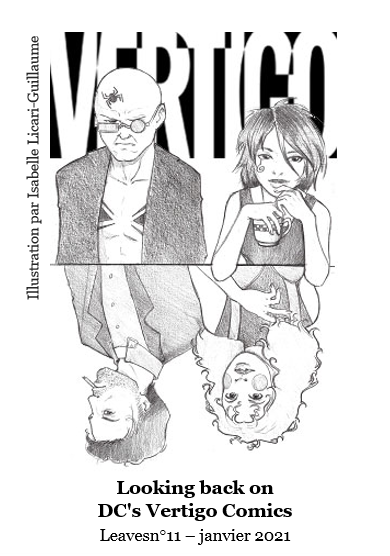
Abstract: For more than two decades, DC/Vertigo’s Hellblazer with protagonist John Constantine stood out from its contemporaries by confronting mature content, utilizing poignant criticism, and subverting audience expectations. Throughout the series, various creative teams allowed Constantine to engage with a mostly realistic world while growing and changing in response to societal evolution. This article analyzes Hellblazer’s examination of contemporary societal discourse as well as the series’ thematic exploration of humanity, as seen through Constantine’s Satanic Panic origins, its critiques of organized religion and U.S. culture, and numerous other social criticisms. As such, several stories spanning the entirety of the series are used to explore Hellblazer’s critiques and commentary surrounding socially relevant issues across several years of real-world progress and comic book content.
Keywords: Vertigo Comics, John Constantine, Social commentary, Satanic Panic, Religious critiques, Cultural criticisms
Résumé : Durant plus de deux décennies, la bande dessinée Hellblazer de DC / Vertigo, avec son protagoniste John Constantine, s’est distinguée par sa capacité à aborder des contenus complexes, à formuler des critiques poignantes, et à subvertir les attentes de son public. Tout au long de la série, les équipes artistiques successives ont permis à Constantine d’interagir avec un monde souvent réaliste, mais aussi d’évoluer au gré des transformations sociales de son temps. Cet article analyse la façon dont Hellblazer examine le discours social contemporain, tout en explorant la question de l’humanité (comme on le voit dans le lien initial entre Constantine et la Satanic Panic) et en formulant une critique des grandes religions de la culture états-unienne, ainsi que de nombreuses autres observations sociales. Pour ce faire, cet article examine plusieurs récits extraits de la série dans son ensemble, afin d’analyser les critiques formulées dans Hellblazer concernant des sujets de société, sur une longue période marquée par les évolutions du monde réel et les changements de la bande dessinée.
Mots-clés : Vertigo, Hellblazer, Critique sociale, Satanic Panic, Critique religieuse, Critique culturelle
Silk Cut, trench coat, and the face of a music legend. These traits describe the man everyone hates to love but does so anyway, John Constantine. Introduced to the DC Comics’ Universe in The Saga of the Swamp Thing #37 in 1985 before spinning off into Hellblazer and being touched by several creative teams through his various permutations, he stands as a literal and metaphorical icon of the British Invasion of comics, inextricably linked to the period. Like the movement itself, the undeniably and unabashedly British character and series helped shape the modern comic book landscape. Rife with personality and social commentary, Hellblazer was a breath of fresh air from typical superhero narratives, despite its sordid subject matter, at a time when the industry had gone slightly stale due to factors like industry content restrictions, overreliance on iconic characters, and the creation of barriers for new readers due to increasingly complex continuities. As Vertigo’s longest-running series, spanning 300 issues from 1988-2013, it thrived amidst the freedom to confront mature content and, despite dealing with the macabre and grotesque, it transcends mindless sexualization and violent exploitation by utilizing poignant criticism and subverting expectations. The series’ criticisms and Constantine’s role as an outside observer of social discourse throughout Hellblazer’s original 25-year run, starting at DC and then Vertigo from 1993 onwards, are of particular importance to its legacy.
Hellblazer was fairly unique in that its protagonist aged in real time as the series progressed and was grounded in a mostly realistic world. It took an organic approach to storytelling and character development that allowed Constantine to grow and change in response to societal evolution. Authors addressed contemporary issues through Constantine, who served as a quintessential voyeur, a modern nomadic observer of humanity unafraid to engage with controversial subjects. In a world of gods, monsters, and magic, Hellblazer and the story of John Constantine are ultimately about humanity. This is seen through Constantine’s Satanic Panic origins, the series’ critiques of organized religion and U.S. culture, and numerous other social criticisms.
It is worth mentioning that since Hellblazer ended, Constantine has appeared in several cross-media adaptations and comic book reboots. While they show the character’s popularity and continued relevance in the pop cultural zeitgeist, they will not here be given much attention. To provide worthwhile critical analyses would draw attention from the discussion of DC/Vertigo’s Hellblazer. Also, the adaptations and reboots deviate from the source material in significant ways, as evidenced by a noticeable shift of focus. In trying to remain objective by ignoring their overall quality, it cannot be ignored that the non-Vertigo products either rely almost entirely on generic super-hero spectacle, or they struggle to balance style and substance. Where the original series utilized its platform to say something about humanity and add to the social discourse of contemporary topics, the lack of deep thought-provoking commentary and thematic substance is generally noticeable in the various adaptations and reboots, the extent of which varies from product to product. However, it should be noted that the newest reboot, Sandman Universe: Hellblazer (2019), despite being in its infancy, is a promising successor to the original series.
Satanic Panic Origins
History often influences characters’ origins. Batman was a Depression-era hero originally combating common street crime, while Bruce Wayne was his rich playboy alter ego that children could idolize. Captain America was born during WWII, punching Hitler in his debut issue at a time when the U.S. needed a patriotic hero. Luke Cage and Iron Fist are products of 1970s Blaxploitation and Kung Fu film crazes. This holds true for John Constantine and his connection to the Panic. This period in the 1980s and 1990s was characterized by mass hysteria in the U.S. surrounding magic and the occult, Satan’s influence on society, the media’s corrupting effects, the perceived collapse of religion/family structures/values, and Satanic Ritual Abuse (SRA), which refers to occult/Satanic rituals involving physical, psychological, and/or sexual abuse of individuals (Janisse; Heller-Nicholas; Corupe; Baddeley; Nastasi; Ferguson; Ladouceur). While tied to developments in U.S. history, the period’s impact spread globally, reaching countries like Canada , the United Kingdom , and South Africa.
Several connections can be seen between broader culture, the Panic, and Constantine’s activities within TheSaga of the Swamp Thing and Hellblazer. In the 1960s, contemporary Satanism and Anton LaVey’s Church of Satan were established, presenting “new unorthodox beliefs” (Parfrey 7). This religion is, in essence, a contradiction of Christianity and other established religious belief systems. LaVey’s brand of Satanism has no deity or God. Satan is not the clichéd horned red beast with a pitchfork but is instead viewed as a dark natural force. The ideology’s focus is not about serving others. Instead, it is about serving oneself and embracing/celebrating the carnalities and desires of man that other organized religions would deny. It is not about spirituality, instead relying on philosophy and rational ideas based on centuries worth of examples of mankind’s nature and struggle for survival. The Church of Satan is a congregation of realists. Unlike Christianity, it does not embrace what they see as repression based on hypocrisy and insincere piety, nor blind idealism reaching for a mythical land.
This revival of occultism and alternative religions garnered widespread attention thanks to periodicals like TIME and LIFE (Janisse). The 1960s and 1970s also experienced a rise in curiosity about occultism due in part to cinematic classics like Rosemary’s Baby (1968), The Exorcist (1973), and The Omen (1976). This fascination extended to horror-based trends in literary fiction via widespread cheap paperbacks published in the 1970s and 1980s like The Closed Circle (1976) and Shrine (1983), with many focusing on Satanic subjects, witchcraft, and other macabre elements. Content such as this built to an eventual breaking point. One of the Panic’s inciting incidents was 1980s Michelle Remembers, a memoir of Michelle Smith’s alleged childhood experiences as a victim of SRA based on resurfaced repressed memories. Though ultimately dismissed as a hoax, the book had significant influence in spreading mass panic over the proceeding decade. Building on this hysteria was the McMartin Preschool Trial. Starting in 1983, it was alleged that children at the McMartin Preschool in California had been victims of SRA conducted by its staff. Claims of roughly 400 victims resulted in the arrest of seven employees and a seven-year trial. In 1990 the McMartin trial ended with zero convictions, which some consider the end of the Panic. While widespread Satanic fear would largely subside, the Panic had a lasting impact on many individuals, aspects occasionally resurfacing in subsequent years.
Comics and the Panic: Swamp Thing
Growing fear of Satanic evil in the U.S. is paralleled in Swamp Thing’s “American Gothic” story arc from 1985-1986. The storyline features a supernatural road trip where Constantine leads Swamp Thing across the U.S. to witness and confront horrific by-products of a rising evil, culminating in a battle in hell against an evil known as the Darkness. The trip and its connection with growing horror reflects the Panic and society’s perception of evil within the U.S. Additionally, supernatural events reflect real human horrors, providing a basis for social critiques. For example, issue #38 (“Still Waters”) and #39 (“Fish Story”) critique U.S. Americans’ fear of outsiders and immigrants. Here, the outsiders are vampires, embodying U.S. perceptions of foreigners as violent monsters invading their home, yet all the “invaders” truly desire is their own realization of the American dream: a home, food, and a safe place to raise their offspring.
Issue #40 (“The Curse”) syncs the female menstrual period with the lunar cycle of werewolves and considers the plight of women in American society. Both lycanthropes and women in the U.S. are stigmatized and treated as cursed. Issues #41 (“Southern Change”) and #42 (“Strange Fruit”) illustrate the undying, cyclical nature of racism and bigotry in the U.S. African slaves return from the dead looking for freedom/peace, while actors filming on a haunted plantation are possessed and forced to reenact past evils. Racism is also displayed on set pre-possession, showing humanity’s inability to learn from the past. Highlighting the worst of humanity and presenting such social critiques would become a staple of Hellblazer.
Comics and the Panic: Hellblazer
Hellblazer embodies many 1980s societal fears, manifested in a literal, albeit fictitious, manner. Constantine’s fictional biography parallels and is informed by the societal developments that gave rise to the Panic. Hellblazer #9 reveals his canonical birthday is 10 May 1953, meaning he studied the dark arts and developed his magical skills before the 1980s’ mass panic. Issue #9 also establishes that Constantine pursued the occult “twenty years ago” (15) indicating the late 1960s. This is further illustrated in Hellblazer #31, in which Constantine curses his father Thomas as revenge for burning his books on magic in 1967. This parallels the real-world establishment of LaVey’s Church of Satan in 1966 , publication of The Satanic Bible in 1969, and societal acceptance of occultism and alt religions in the late 1960s and early 1970s. The occult was even seen as popular and sexy, as Marcello Truzzi stated of occultism’s appeal at the time: “You get asked to parties” (qtd. in McCall 3-B). Constantine shares this sentiment in Hellblazer #9, stating he got into the occult “Strictly for the laughs—and sex” (15).
Punk rock culture of the 1970s was another facet of the character’s life. Constantine was a punk rocker and front man of the band “Mucous Membrane” in the late 1970s, tying into beliefs of Satanism and occultism permeating the music industry, especially since Constantine practiced the dark arts at the time (Ladouceur; Handley, “A Hell of a Time(line)”). It also places him in good company with celebrity magic practitioners and occultists like David Bowie, Led Zeppelin’s Jimmy Page , and Constantine’s co-creator Alan Moore. Constantine was also modeled after Sting, known for a successful solo career and his time with The Police. Artists Stephen Bissette and John Totleben shared an affinity for this musician. As stated by Alan Moore in a 1993 Wizard magazine interview, Constantine “only existed because Steve and John wanted to do a character that looked like Sting” (44). It appears to be synchronistic that he was modeled after a new wave musician in a post-punk era that was part of the second British Invasion , since Constantine was introduced during the post-punk period of his life and Hellblazer was part of a new wave of comic books coming out of the British Invasion of comics.
As a rocker, Constantine was a member of the teen counterculture, evidenced by his adoption of the 1970s punk scene and ideology. The Sandman Presents: Love Street #3 states that he left his hippie lifestyle after seeing the Sex Pistols in 1976 at London’s 100 Club. Constantine’s punk past is explored throughout Hellblazer and it is established that he rebelled against societal norms while engaging in drug use, sex, and occultism, activities Evangelical Christians were fighting against in the 1980s. Additionally, lacking any apparent religious influence, Constantine’s broken family does not fit the traditional family values Panic propagators promoted at the time.
Constantine’s dysfunctional family is explored throughout Hellblazer. Issue #35 establishes that his father Thomas went to jail after stealing women’s undergarments, leaving Constantine and his sister Cheryl with an aunt and an abusive uncle. Examples of family dysfunction can also be seen in issue #100, in which Thomas’ abusive relationship with Constantine is depicted as well as his lust after his daughter Cheryl and the revelation that he was responsible for the death of Constantine’s mother. The reader discovers that despite blaming Constantine for her death, a drunken Thomas forced his wife into a coat-hanger abortion.
Other Panic-related connections include religious/societal themes and criticisms, which appear strongest in writer Jamie Delano’s work with the character. Constantine’s defining moment at Newcastle in Hellblazer #11, during which he inadvertently damned a girl’s soul to hell during an exorcism, directly parallels believed-to-be-widespread SRA. One of the best examples of what society believed to be occurring comes from the book Michelle Remembers. Michelle claimed her mother aligned with Satanists and subjected Michelle to physical and psychological horrors as part of their Satanic rituals including sexual torture (Heller-Nicholas 20). In Hellblazer #11, it is revealed that Constantine and his band were once invited to the Casanova Club by owner and sex/drug magician Alex Logue to partake in a magical orgy. It turned out Alex was abusing his daughter Astra, and incorporating her into his orgies. Clearly, Astra is a victim of the types of SRA rumored to be occurring during the Panic.
In the wake of Michelle Remembers, fear grew for youth safety in response to supposed problems resulting from a lack of focus on God, and gravitation toward Satan and alternative religions. Constantine’s sister Cheryl Masters’ family represents people who, like many in the real-world, attempted to save their family by turning to religious organizations. In Hellblazer, such a group is the Resurrection Crusade (RC), a fanatical U.S. Christian group paralleling real-world organizations like radical Evangelical Christians selling spiritual solutions to real-world problems (Janisse and Corupe; Janisse; Nastasi). This was done in the hope that bringing God to the center of one’s family and returning to traditional values would strengthen familial relationships, thereby keeping homes together. The RC’s move from the U.S. to the UK also mimics the Panic’s real-world international spread.
Connections between the Panic and RC can be seen in Hellblazer issues #4-10 (1988). The Masters family joins the RC, described by Cheryl’s daughter Gemma in issue #4 (n.p.) as dazzling her parents with religion and constantly shouting about God and Satan. This reflects actions by real religious groups and those lured in by the promise of security through religion. The RC also gave the Masters a better home in exchange for selling their Pyramid of Prayer videos, moving them to the suburbs. In the U.S., suburbs were considered ideal places for families based on a perception of security. The Masters fit the criteria of an idealized suburban family of the time: white and religious. Fear of Satanic outsiders infiltrating the security of religiosity and the suburbs is realized in Hellblazer #4 as Gemma is lured away by three girls promising freedom and change. They are later revealed to be the ghosts of victims murdered by a Satan worshiper who tries to sacrifice Gemma to the devil. This illustrates real concerns of the time as many feared losing the nation’s youth to Satan (Janisse and Corupe; Nastasi; Baddley).
The RC also advocated against what they deemed harmful media and considered TV to be advertisements for Satan, reflecting Panic ideology. For example, “religious scare” propaganda like Deception of a Generation (1984) and Doorways to Danger (1990) warned against corruptive devilry in certain children’s cartoons, toys, and games. The RC only allowed their followers to watch Pyramid of Prayer videos, paralleling Evangelical Christian VHS tapes that spread their propagandist message during the 1980s. This ultimately kept people in a vacuum of disinformation, reactive paranoia, and repetitive fear-perpetuating messaging, which were often watched by those already susceptible to this messaging who would continue spreading the word.
The RC should theoretically be a morally just organization, given their outward religiosity. However, Hellblazer clearly depicts them as villains and, in their own way, as bad as the Damnation Army, a counter-group led by the demon Nergal. They act much like radically conservative/Evangelical Christians, condemning anyone and anything that did not fit their worldview during the Panic, occasionally destroying lives in the process.
The RC blames Gemma for her disappearance instead of addressing the real reasons she ran away in the same way that extremist religious groups blamed entertainment products for corrupting youth, sometimes leading to suicide or murder. In these instances, potential factors like depression or toxic home life were ignored in favor of scapegoating games and media, Satan, or lack of faith in God. Like many real-world religions, the RC profits off the beliefs of others to finance their own agenda. Also, the RC is responsible for committing very un-Christian acts in God’s name, as seen in Hellblazer #4-10, such as murder, bigotry, kidnapping, reeducating a woman for their agenda, and claiming their beliefs are correct while treating others like a Satanic disease. These acts reflect Evangelical Christians’ actions during the Panic as many acted for personal gain and propagated unsubstantiated claims to further their agenda without considering the consequences. Several individuals also operated as self-proclaimed content experts, when in fact many were often unfamiliar with either the occult or the material they were protesting. It did not matter who was impacted by their actions as long as their agenda was advanced.
Delano’s run from 1988 to 1991 highlights the absurdity of the Panic by incorporating the parallels described above, taking the claims being propagated, depicting them in a serious manner, and pushing them to their extremes. Since none of the horrors real-world religious groups alleged ever truly came to pass, it illustrates how fantastical these beliefs were, especially given how many lives were impacted by the mass hysteria. This is not to belittle actual abuse but many claims made during the Panic were untrue, misrepresented, or avoided addressing real problems by alleging Satan’s involvement.
Critiquing the U.S.
Beyond the Panic, Hellblazer depicts realistic human horrors, often portraying problems not wholly occult-related. While issues are not necessarily unique to one country, U.S. social reality is regularly highlighted throughout the series. In 1988’s Hellblazer #1 and #2, Constantine travels to New York City to defeat a hunger demon. This is a clear critique of U.S. consumerism as the demon’s victims kill themselves trying to satisfy uncontrollable hunger and over-indulgence in their obsessions be they food, jewelry, comic books, religion, or exercise. The NYC setting seems appropriate given its reputation as a financial center and a reflection of 1980s’ materialism and consumerism. Garth Ennis and Steve Dillon’s “Damnation’s Flame” arc in issues #72-75 (1993-1994) shows Constantine walking through a section of hell which serves as a dark reflection of the U.S. It covers themes of patriotic amnesia by highlighting parts of America’s past often ignored by its citizens in favor of more nationalistic and flattering narratives. For example, it acknowledges how John F. Kennedy is positively remembered by the public despite contradictory evidence that should tarnish his legacy, such as his reputation as the great Catholic president in spite of his infidelity. It also highlights the abhorrent treatment of the Native Americans, a fact often left out of discussions related to the U.S.’s reputation/history. Also, Brian Azzarello et. al.’s run in issues #146-174 (2000-2002) sends Constantine on a road trip through the U.S. highlighting horrors such as problems in the prison system, the corruptive influence of the super-wealthy, and religious justification of hate.
A Nation of Horrors
Jamie Delano and David Lloyd also explored facets of the U.S. within the miniseries The Horrorist (1995-1996), which focuses on broader social issues including the impact of war, as well as Americans’ passivity and willful ignorance to societal problems. It centers on an emotionally numb Constantine trying to reclaim his humanity and Angel, a debatably-human entity called a “Horrorist” that was itself a victim of human horrors that went on to redistribute suffering to the ignorant. Angel’s trek through the U.S. acts as a method of gruesome enlightenment among the inhabitants of an unknowing and egocentric country. She breaks through American dissociation from contemporary human atrocities, unveiling worldwide suffering and thereby annihilating the self-indulgent and egotistical nature of those she meets.
Released in the mid-1990s, the narrative serves as a critique of the U.S.’s self-centeredness and complacency with respect to the plight of those abroad as well as the less fortunate within its own borders. It also reflects the desensitized isolationism of the public due in part to the emergence of 24/7 entertainment programming in the 1980s and 1990s. While these trends are not unique to the U.S., it still serves as an appropriate setting for this story given the country’s blood-soaked history and cruelty towards minority and Indigenous populations. Clearly, many had become numb to the troubles of others, especially if something was to be gained through a lack of empathy. During the story, Angel unveils the suffering of others to those isolated from the effects of the world’s horrors, annihilating society’s self-indulgent and egotistical nature, and demonstrating the scope of human horror. She represents all human suffering and lets those she meets know “that what they do to others, even by neglect, they do, ultimately, to themsel[ves]” (Angel n.p.).
Angel’s family, the Jorgensens, were U.S. aid workers from a missionary group who adopted her because, as Martha Jorgensen says, “[God] made us seek her out and save her” (n.p.). The adoption can be seen as genuine care of others or as a method of self-aggrandizement under the pretense of religious intent similar to missionaries invading other cultures under the guise of aid and education, but often with their own agenda. The Jorgensens, who sought to profit from war under the façade of serving a higher purpose, ended with nothing. Their daughter withered from anorexia, the father committed suicide, and the mother lost her family.
Similar experiences occur with other characters. Children have a snowball fight, treating war like a game and laughing about killing each other. They then experience true horrors of war, dying from buried landmines. A nearby mailman who witnessed the event collapses, refusing to believe this horror can happen in the U.S. He sees the country as an idealized safe haven, believing evil happens elsewhere. However, as Angel points out, such things happen everywhere. Countless examples of real-world mass violence prove the U.S. is not immune. Later, Angel is picked up by a Sheriff who kills and buries her. His ironic ending relates to his role as sheriff to serve, protect, and enforce the law: he ultimately abandons his role by breaking the law and killing his whole family. He demonstrates that keepers of the law can be as bad as the criminals they combat. This reflects the general corrupting influence of power as well as the U.S.’s historic problems of police corruption. An example contemporary to this story would be the LA Riots in 1992, a product of civil unrest surrounding racial injustices, police brutality, and abuse of power.
Delano and Lloyd broaden their critiques to non-American characters like Phil Jamieson, a British photographer who covered numerous warzones and photographed Angel overseas. His photo of Angel surrounded by the repercussions of the Mozambique Civil War (1977-1992) was sold to an agency to finance another trip. As Jamieson states, the agency “sold it for some creepy famine-chic fashion ad…cropped it to shit…pulled her right out of context” (n.p.). This highlights the media’s manipulation and exploitation of human suffering for profit while showing Jamieson’s actions as a neutral bystander immortalizing horrific moments. He documents tragedy, similarly profiting from the distress of others, but never trying to prevent anything. In the end, he gouges his eyes out, prohibiting him from seeing ever again, which reflects his blindness as a neutral bystander and questions the morality of real photographers’ inaction during conflicts. It also mirrors general bystanders ignoring those in trouble, raising questions of readers’ own inaction during real-world situations and questioning whether they would liken themselves to the photographer by ignoring those in distress and due to their own inability to affect the events of the story.
Finally, in a moment disconnected from Angel, a man is killed in a London bar, reflecting humanity’s ignorant and egocentric nature. The man’s throat is cut and another patron tries to stop the bleeding. However, when a third person raises concerns about AIDS, the Good Samaritan ceases his efforts, more concerned about his own wellbeing than the person dying. Ultimately, this story touches upon the numbness and desensitization of society due to isolation from atrocities occurring outside one’s immediate vicinity. Mankind is shown to have become indifferent to those beyond their personal bubbles, in part due to the disconnecting nature of 24/7 entertainment media.
A Culture of Gun Violence
Another strong critique comes from the standalone story “Shoot” by Warren Ellis, Phil Jimenez, and Andy Lanning. It was intended to be published as Hellblazer #141 for a late-1999 release; however, DC shelved the story following the Columbine High School shooting (Handley, “Daring to Walk”), which occurred earlier that year and resulted in 13 deaths, 24 individuals injured, and the suicides of both shooters. While DC’s decision is understandable, it is unfortunate as the story perfectly fits the public discourse of the time and serves as an astute critique of the U.S.’s handling of mass killings. “Shoot” follows Penny Carnes, a U.S. researcher trying to find the cause of school shootings. In the attempt, she grows exhausted by the task’s apparent futility, finding Constantine present at several of the shootings.
Constantine explains he is looking into the death of a friend’s son, a school shooting victim. He states to Penny that neither she nor the country has “the faintest fucking idea what [they’re] looking at…[They’re] all looking for something to blame when [they] should be looking out the window” (19). Constantine means that everyone is so busy trying to identify some singular motivation driving people to violence that they are missing the bigger picture. These problems stem from deeper societal and cultural issues. Everyone involved in the killings is a victim of a dysfunctional country broken by past generations leaving its youth with no future to look forward to and who wait for death. Simply put, there is no easy answer to the problem. Additionally, Constantine is a native of Liverpool. He represents the outsider perspective, reflecting the world’s confusion and disapproval over the U.S.’s obsession with firearms, weak/problematic gun laws, inability/unwillingness to address gun-related issues in the face of continuous shootings and associated deaths, and the general discourse surrounding U.S. gun culture. This further justifies Constantine’s perspective and frustration, emphasizing worldly awareness of the U.S.’s ignorance of what is happening in their own backyard. As Constantine says, “you should be looking out the window” (19).
While possibly a controversial message, the story’s thesis is tied to problems rooted in the U.S.’s bloody history as these violent acts have plagued the country for decades. 1949’s “Walk of Death” was a mass shooting in Camden, NJ by a WWII veteran (13 dead, 3 injured). In 1966, an ex-Marine was responsible for the University of Texas tower shooting (15 dead, 30 wounded). In 1989, the Cleveland Elementary School shooting occurred in Stockton, California (5 dead, 30 injured). This is far from a comprehensive list of U.S. mass shootings; however, it illustrates the problem leading to Columbine and the planned publication of “Shoot” in 1999.
“Shoot” would eventually be published in Vertigo Resurrected (2010) and the Hellblazer: Shoot (2014) trade-paperback. Ironically, Constantine’s criticism of the U.S. still resonates today and applies to mass violence beyond Columbine. Since 1999, violence has persisted as evidenced by shootings like Virginia Tech in 2007 (32 dead), Sandy Hook in 2012 (27 dead), and the Las Vegas music festival in 2017 (58 dead). It also appears this problem is increasing. TIME reported on mass shootings based on incidents with at least three deaths from 1982 to 2019, highlighting events per year and stating the number of people killed and wounded. It conveyed the following data: the 1980s had eight incidents and 75 total deaths, the 1990s had 23 incidents and 149 total deaths, the 2000s had 20 incidents and 160 total deaths, and the 2010s until August 4, 2019 had 63 incidents and 512 total deaths. By this metric, violence of this kind in the U.S. has clearly worsened, further emphasizing the continued relevance of “Shoot” over a decade after its original intended publication date.
“Shoot” also emphasizes mass gun violence as a U.S. dilemma, a sentiment supported by empirical data. In 2015, Adam Lankford conducted a global quantitative analysis of public mass shooters from 1966 to 2012, based on the perception that this type of violence is largely a U.S. problem. He found that “the United States had a disproportionately high number of offenders: despite having less than 5% of the global population…it had 31% of global public mass shooters” (Lankford 8). From a sample of 292 public mass shooters, the U.S. claimed the most offenders at 90 and the Philippines was second with only 18.
Another important aspect of Constantine’s criticism of U.S. culture is his condemnation of scapegoating convenient culprits of mass violence and school shootings rather than addressing larger systemic problems. Similar to the U.S.’s history of violence, this deflection has been a national issue for years. Entertainment media has often been blamed for causing real world problems. Recently, video games have garnered criticism for allegedly inspiring mass shootings. Columbine and Sandy Hook were both blamed on video games, which were held up as training modules for the shooters. Similarly, comic books, particularly 1940s crime and 1950s horror comics, were blamed for causing juvenile delinquency, most famously by Dr. Fredric Wertham in his 1954 screed Seduction of the Innocent. Human behavior is complex; instead of helping children and finding the roots of their violent/delinquent actions, comic books were blamed and the comics industry was negatively impacted as a result (Frank; Wright). This also reflects scapegoating that occurred during the Panic, as described earlier. History has proven Constantine’s stance, justifying his frustration and adding a sense of timeless relevance to the criticisms in “Shoot.”
A History of War
Expanding on mass violence, Hellblazer has explored war and its impact. For example, Hellblazer #5 (1988) sees Constantine visit an Iowa town whose inhabitants hope the soldiers they lost in Vietnam might return home. Vietnam was a contentious war that divided the U.S. It was fought on two fronts, soldiers in Vietnam and civilian protestors as illustrated by demonstrations on U.S. soil, some of which turned violent like the Kent State shooting that ended in the deaths of four students. Ending in 1975, it would be referred to as “the living-room war” or “the television war” due to being the first war covered with televised footage. The observable nature of the Vietnam War may have influenced its treatment within the highly visual medium of comic books such that the most negative aspects of the conflict were depicted, which was distinctly different to comics’ treatment of prior military actions. The gruesome aspects of humanity on display can be seen in photos like The Burning Monk by Malcolm Browne in 1963, Saigon Execution by Eddie Adams in 1968, and The Terror of War by Nick Ut in 1972. Finally, unlike in WWII, soldiers returning from Vietnam were ostracized and demonized for their role in the conflict. Countless veterans also experienced severe mental and physical trauma, many continuing to suffer decades later.
Hellblazer #5 inserts Constantine into this discourse as a voyeur of the aftermath in post-Vietnam U.S. The inhabitants of Liberty, Iowa live in uncertain hope regarding the return of their missing sons, Frank Ross being the only soldier who had returned home. He finds himself isolated from a town that hates him, struggling with survivors’ guilt and shame for his actions in Vietnam. He turns to alcohol to dull his memories, illustrating his struggle to cope. Ross also suffers from PTSD, which plays a large role as he joins his fallen platoon, literal ghosts of war, reenacting past horrors and bringing them home to Liberty. Ross relives his rape and murder of a Vietnamese woman, unaware his wife has taken the place of his victim. Meanwhile, the specters of his platoon relive their destruction of a village and taking of hostages, roles filled by Liberty’s inhabitants. The story builds to a truck exploding at a gas station, ending the siege in a blast reminiscent of aerial bombings. Constantine is left as a witness, unable to intervene, afraid and helpless to stop the horrors of war taking place in what he refers to as “Vietnamerica” (23). This story shows the undying inevitability of war and how it impacts everyone, including those who carry the war home with them.
The horrors of war were also explored in Hellblazer: Pandemonium (2010), a story grounded in the 21st century as Constantine is forced to the front lines of the War on Terror in Iraq. Several parallels with reality help ground the events in a believable modern world. A bombing at The British Museum, though smaller in scope, reflects terroristic incidents like the 9/11 attacks, the 2004 Madrid train bombings, or the 7/7 London bombings in 2005. An off-hand reference to “infidel” beheading videos is made, while such victims are seen during Constantine’s exploration of Tel-Ibrahim. These reflect actual recorded terroristic beheadings that circulated following 9/11. Finally, Constantine’s friend Chas has an associate that claims his television receives “a channel from hell” (11), but as Constantine says, “[H]ow would you tell?” (11). This is clear criticism of the modern TV landscape and the 24/7 news cycle turning suffering into profit through constant, arguably exploitative, coverage of war. It is also applicable to coverage of other horrific events like mass shootings, natural disasters, etc.
More important is the connection between war and hell, including ties to war profiteering. Throughout the story there are several references to positions of power and the profitability of war, drawing direct parallels between earthly war and hell. As the demon Nergal states, “War is an engine of fortune. It devours life and shits out treasure” (44). This is a clear reference to war as a business, individuals dying for their country while others profit. Companies like Lockheed Martin, Boeing, and BAE Systems have made billions off arm sales, and governments often have their own secret agendas for war, as evidenced by The Pentagon Papers which revealed the truth of the U.S.’s involvement in Vietnam. Nergal celebrates hell’s success in the new millennium as it profits from man’s ignorance and self-destructive nature, placing demons on the same level as governments, politicians, and businesses. These powerful entities profited from human tragedy following the turn of the century and 9/11. The U.S. government exploited its citizens’ patriotism and desire for revenge, entering into conflict in the Middle East under the guise of seeking justice and searching for ultimately nonexistent weapons of mass destruction.
There is also a thematic connection to gambling, culminating in hell’s literal treatment of war as a game. Constantine plays a card game likened to poker to escape hell. This is referred to as “the Game of War” (Nergal 104), which uses ancient coins as betting chips that are composed of mortal souls which are demons’ profits from human war. War is shown to be a game and like poker has players invested in the conflict; strategy is required, and there are winners and losers. Constantine is gambling with human souls and makes it clear that he is trying not to squander the lives he’s playing with “in cold pursuit of the greater fucking good” (113), much as those in power gamble with lives during conflicts. This game represents real governmental approach to international involvement in war, as all wars are games of chance. As Constantine states during a reflection on the violence of war, it is a “chaotic lottery of death” (81). After Constantine wins and returns home, he points out the broader societal involvement in war. As he says, in the end, we all like to find things to blame for war yet we are all culpable for these conflicts given our ability to vote, selecting those in power who lead us down violent paths (Constantine 126).
Broader Social Discourse
Hellblazer has covered other important social themes that remain relevant beyond the period of their initial release. “Fear and Loathing” (1993) by Garth Ennis and Steve Dillon in Hellblazer issues #64-66 deals with contemporary hatred and racism. “Rake at the Gates of Hell” (1994) by Ennis and Dillon from issues #78-83 covers similar themes while highlighting the struggles of black individuals and their conflicts with authorities due to police corruption. This is illustrated by a constable responsible for the death of an older black woman and then dismisses it as no big deal, which leads to a violent race riot between black individuals and police. This reflects actual horrors tied to racial tensions and conflicts with police occurring in Britain as early as the 1950s, including the 1976 Notting Hill Carnival riot, and persisting into the riots of the 1980s. These stories illustrate the cyclical nature of violence as conflicts like these have occurred throughout history, and unless society learns from such altercations there will be no true resolutions.
Looking Toward the Future
One more narrative is worth discussing due to its unique perspective as a story released in 2000 but set in 2025. Hellblazer Special:Bad Blood (2000) by Jamie Delano, Philip Bond, and Warren Pleece deals with conflict in London between Republicans and Royalists. At a time when the monarchy is on the verge of ending, Constantine’s friend Dolly appears to be the unwitting sole heir to the throne. Some of the populace believe in change, while others want to maintain the monarchy. A faux-biopic on television known as Bloodline is used to sway the public into believing that Dolly is truly royalty in order to maintain the status quo. Despite its release date and somewhat fantastical elements, the story provides an oddly insightful look into the future.
This miniseries was released during a time when technology was on the rise. Although the Internet had existed for years, the late 1980s and early 1990s saw the birth of the world wide web, leading to its general acceptance among the broader public. From the mid-1990s to the early 2000s, the Dotcom Bubble occurred, a period characterized by expanding use of and access to the internet during which a great deal of money was invested into internet start-ups and related technology. With this in mind, several aspects of this miniseries can be analyzed under media/communication theory.
Uses and gratification theory deals with the idea that people actively seek out media to fill certain roles/purposes in their lives, receiving satisfaction from exposure as personal need fulfilment. In the story, audiences receive satisfaction from Bloodline as those who support the monarchy learn of a new heir to the throne, fulfilling their need for consistent government control. The Royalists rely on audiences developing a relationship with Dolly through para-social interactions. Para-social relationships are perceived, one-sided relationships between audiences and mass media personalities, particularly those on TV, which can develop through mediated interactions. This also relates to the deification of Princess Diana. Deification of celebrity figures is possible as many individuals follow celebrities via social media and worship them in their own ways. Princess Diana in particular still receives tributes from fans decades after her death. This is taken to an extreme in Bad Blood by Popsat, a Royalist propaganda TV station, which preaches “vision[s] of the sacred Diana” (no. 1, 6) to the Dianites, a religious group dedicated to the late princess. As Constantine states, Princess Diana “has more followers than the Virgin Mary” (no. 1, 6).
Bad Blood also incorporates backdoor political dealings, government conspiracies, and the media, which is used to manipulate the masses through agenda setting and framing of content. Agenda setting deals with the idea that the media controls public discourse by telling audiences what to think about, meaning issues portrayed as important in the media are subsequently deemed important by the public. Framing is the way in which information is presented to the public, which impacts audiences’ interpretation, perception, and acceptance by drawing attention to certain information and away from others. This can be seen in the way the rich and powerful use Bloodline to manipulate the public into believing their lies, unaware of the hidden agenda and manipulated messaging behind the series. There is clear blurring of lines between fact and fiction within Bloodline as well as in reality through media’s portrayal of events.
Modern media struggles with these concepts as it has become easier than ever to disseminate inaccurate information on a mass scale. On television, manipulation occurs through broadcast news as evidenced by CNN and FOX News, the former being historically somewhat liberal while the latter conservative. Both political leanings raise concerns of biased reporting. In Bad Blood, there is clear biased reporting from Popsat which feeds into the beliefs of the Dianites and pushes the Royalist agenda through the series Bloodline.
Manipulation can also be found in the marketing of The Blair Witch Project (1999). Internet and other media sources were used to convince audiences that the found-footage film depicted true events, which successfully tricked many individuals upon its initial release. Similar deception occurs within Bad Blood. One could theoretically rewrite history through the media, as accomplished by Constantine who utilizes script rewrites of the Bloodline finale to help sell his own narrative. The story’s lesson is that all one needs to sway the public is the right message wrapped in a convincing narration. Constantine and a scriptwriter manipulate the audience, thereby molding the future of London. This is no different than the distortion of facts by political parties. In Bad Blood, the media develop their own narrative that has some basis in fact but twists key details for their own nefarious purposes. It appears to work as people riot when they think their beloved Dolly was killed based on reports by the media.
In addition to the use of entertainment media, technologies are explored years before they were realized. Body doubles used for digitally inserted computer-generated faces are becoming prevalent in the real world of 2019. In the story, a computer simulation of Dolly’s head is used to make a body double appear to be her. As far back as the 1990s, archive footage was being used in media like the Tales from the Crypt (1985) episode titled “You, Murderer” (1995) which starred Humphrey Bogart using archival footage and a voice double. Forrest Gump (1994) manipulated footage to edit the title character into historical events. More recently, Rogue One (2016) brought Peter Cushing back to life using CGI and a body double. Technology has also been developed that can replace faces through footage manipulation to a disturbingly realistic degree through a method known as “deepfakes”. If used for nefarious purposes, this form of nearly pristine video manipulation paired with convincing audio could effectively influence the masses as they did in Bad Blood. Although released in 2000, the comic’s narrative predicted certain aspects of technology and society, while highlighting the influence of the media.
Thematically Human
Despite the presence of the occult, Hellblazer is primarily about humanity. Regardless of the threats Constantine faced or time period in which his adventures were set, the stories ultimately returned to the men behind the monsters, society’s flaws, and the horrors inherent in human nature. Beneath magic and occultism lay the harshest critique of all, that humanity is flawed, and often as bad or worse than demonic entities. In the “Haunted” arc by Warren Ellis and John Higgins from Hellblazer issues #134-139 (1999), Constantine investigates the brutal murder of a former lover. With the help of DCI Watford, the pair tracks down the man responsible for the woman’s death and enact torturous revenge. During the events of issue #139, Watford voices the following quote:
Funny, innit?… People’s expectations. You see a thing like Bracknell’s body, and you think, fuck me, it takes a monster to do something like that. I see it every time. They say, inspector, surely no human did this. This is the work of a demon. Or some bollocks like that, depending on where they went to school. They always expect the monster. And it’s always just some bloke. Know what I mean? It’s just some geezer. It’s the bloke next door, the pretty boy who smiles at you in the news agent’s. Nice man who takes the same bus to work as you. It takes a thing like finding chummy in there and getting a good look in his eyes to teach the lesson. There ain’t no monsters. There’s no great saving grace, no us and them and we-couldn’t-possibly-do-things-like-that. There’s just us. (Watford 14)
This statement perfectly encapsulates Constantine and Hellblazer’s overarching theme of humanity.
From Constantine’s Satanic Panic origins, his series’ critiques of organized religion and U.S. culture, and numerous other broad societal criticisms, it becomes clear that the character was grounded in reality and social discourse. This grounding made Hellblazer unique and, for better or worse, much of its commentary remains relevant today and seemingly will for the foreseeable future. It provided important insight into an evolving world and explored mature themes, especially since Hellblazer rarely held back on its adult content or condemnations. The series was built on something more than fighting the demon du jour with nonsense incantations, glowing hands, and garish displays of magical power. As such, it is important to remember Vertigo’s longest running series and its place within the industry as a piece of the British Invasion of comics that helped push the boundaries of what comics could be and the kind of messages they could convey.
Bibliography
- Achenbach, Joel. Did the news media, led by Walter Cronkite, lose the war in Vietnam? 25 May 2018. https://www.washingtonpost.com/national/did-the-news-media-led-by-walter-cronkite-lose-the-war-in-vietnam/2018/05/25/a5b3e098-495e-11e8-827e-190efaf1f1ee_story.html. Accessed 29 Aug. 2019.
- Allen, Steve and Robert J Thompson. Television in the United States. 1 July 2019. <https://www.britannica.com/art/television-in-the-United-States>. Accessed 7 Sept. 2019.
- Azzarello, Brian (w), Richard Corben, Marcelo Frusin, Steve Dillon, Guy Davis (a), Giuseppe Camuncoli (p, i), and Cameron Stewart (i). Hellblazer, vol. 1, no. 146-174, Mar.-Aug. 2000-2002, Vertigo [DC Comics].
- Baddeley, Gavin. “Dicing With The Devil: The Crusade Against Gaming.” Satanic Panic: Pop-Cultural Paranoia in the 1980s, edited by Kier-La Janisse and Paul Corupe, 2nd ed., FAB P, 2018, pp. 45-67.
- Bates, Daniel and Helen Pow. Lanza’s descent to madness and murder: Sandy Hook shooter notched up 83,000 online kills including 22,000 ’head shots’ using violent games to train himself for his massacre. 1 December 2013. https://www.dailymail.co.uk/news/article-2516427/Sandy-Hook-shooter-Adam-Lanza-83k-online-kills-massacre.html. Accessed 22 Apr. 2019.
- Bebergal, Peter. Season of the Witch: How the Occult Saved Rock and Roll. Jeremy P. Tarcher/Penguin, 2015.
- Bissette, Stephen. “Cursed Earth & Uneasy Riders.” Moore, Alan. Saga of the Swamp Thing: Book Three, DC Comics, 2010.
- Blake, Meredith. Commentary: “Stranger Things 3” is an anxious ode to ’80s consumerism. 8 July 2019. https://www.latimes.com/entertainment/tv/la-et-st-stranger-things-80s-nostalgia-consumerism-20190708-story.html. Accessed 15 Jan. 2020.
- Bogdanov, Vladimir, et al. All Music Guide to Rock: The Definitive Guide to Rock, Pop, and Soul. 3rd ed., Backbeat Books, 2002.
- Bonner, Michael. “Hellblazer Timeline.” Vertigo Secret Files: Hellblazer, vol. 1, no. 1, Aug 2000, Vertigo [DC Comics], pp. 31-32.
- Brooks, Nancy Rivera. 1980s Shoppers Charged Into a Brave New World of Goods: Consumer products: Electronic gadgets, fitness fads and yuppie indulgences attracted attention and sales during the past decade. 31 Dec. 1989. https://www.latimes.com/archives/la-xpm-1989-12-31-fi-270-story.html. Accessed 15 Jan. 2020.
- Bryant, Martin. 20 years ago today, the World Wide Web opened to the public. 16 Aug. 2011. https://thenextweb.com/insider/2011/08/06/20-years-ago-today-the-world-wide-web-opened-to-the-public/. Accessed 11 Sept. 2019.
- Butler, Jada. We Asked People Around the World What They Think of U.S. Gun Laws. 7 Aug. 2019. https://www.vice.com/en_us/article/d3az8x/we-asked-people-around-the-world-what-they-think-of-us-gun-laws. Accessed 31 Oct. 2019.
- Calio, Vince and Alexander E. M. Hess. Here Are the 5 Companies Making a Killing Off Wars Around the World. 14 Mar. 2014. https://time.com/24735/here-are-the-5-companies-making-a-killing-off-wars-around-the-world/. Accessed 6 Sept. 2019.
- Carpenter, Greg. The British Invasion!: Alan Moore, Neil Gaiman, Grant Morrison, and the Invention of the Modern Comic Book Writer. Sequart Organization, 2016.
- CBS News. Sandy Hook gunman: Did violent video games play a role? 19 Feb. 2013. https://www.youtube.com/watch?v=a12RdmqtroM. Accessed 22 Apr. 2019
- Christensen, William A and Mark Seifert. “The Unexplored Medium: Alan Moore speaks on what makes working as a comic writer so appealing.” Wizard: The Guide to Comics, Nov. 1993, pp. 42-45.
- Conley, W M. “The Tracking of Evil: Home Video and the Proliferation of Satanic Panic.” Satanic Panic: Pop-Cultural Paranoia in the 1980s, edited by Kier-La Janisse and Paul Corupe, FAB P, 2018, pp. 231-245.
- Corupe, Paul. “20-Sided Sins: How Jack T. Chick was Drawn into the RPG War.” Satanic Panic: Pop-Cultural Paranoia in the 1980s, edited by Kier-La Janisse and Paul Corupe, 2nd ed., FAB P, 2018, pp. 69-81.
- Deception of a Generation. Directed by Paul Crouch Jr. Performances by Gary Greenwald and Phil Phillips, produced by Ben David and Gary Greenwald, Eagle’s Nest, 1984.
- Delano, Jamie (w), Brett Ewins, Jim McCarthy, and John Ridgway (a). “Ghosts in the Machine.” Hellblazer, vol. 1, no. 7, July 1988, DC Comics.
- Delano, Jamie (w) and David Lloyd (a). “Antarctica.” The Horrorist, vol. 1, no. 1-2, Dec.-Jan., 1995-1996, Vertigo [DC Comics].
- Delano, Jamie (w) and Jock (a). Hellblazer: Pandemonium, edited by Karen Berger et al., Vertigo, 2010.
- Delano, Jamie (w) and John Ridgway (a). “A Feast of Friends.” Hellblazer, vol. 1, no. 2, Feb. 1988, DC Comics.
- Delano, Jamie (w) and John Ridgway (a). “Extreme Prejudice.” Hellblazer, vol. 1, no. 6, June 1988, DC Comics.
- Delano, Jamie (w) and John Ridgway (a). “Hunger.” Hellblazer, vol. 1, no. 1, Jan. 1988, DC Comics.
- Delano, Jamie (w) and John Ridgway (a). “Waiting for the Man.” Hellblazer, vol. 1, no. 4, Apr. 1988, DC Comics.
- Delano, Jamie (w) and John Ridgway (a). “When Johnny Comes Marching Home.” Hellblazer, vol. 1, no. 5, May 1988, DC Comics.
- Delano, Jamie (w), John Ridgway and Alfredo Alcala (a). “Intensive Care.” Hellblazer, vol. 1, no. 8, Aug. 1988, DC Comics.
- Delano, Jamie (w), John Ridgway and Alfredo Alcala (a). “Shot to Hell.” Hellblazer, vol. 1, no. 9, Sept. 1988, DC Comics.
- Delano, Jamie (w), Philip Bond and Warren Pleece (a). Hellblazer Special: Bad Blood (A Restoration Comedy), vol. 1, no. 1-4, Sept-Dec. 2000, Vertigo [DC Comics].
- Delano, Jamie (w), Richard Piers Rayner and Mark Buckingham (a). “Newcastle: A Taste of Things to Come.” Hellblazer, vol. 1, no. 11, Nov. 1988, DC Comics.
- Delano, Jamie (w), Richard Piers Rayner (p), and Mark Buckingham (i). “Sex and Death.” Hellblazer, vol. 1, no. 10, Oct. 1988, DC Comics.
- Delano, Jamie (w) and Sean Phillips (a). “Dead-Boy’s Heart.” Hellblazer, vol. 1, no. 35, Nov. 1990, DC Comics.
- Delano, Jamie (w) and Sean Phillips (a). “Mourning of the Magician.” Hellblazer, vol. 1, no. 31, July 1990, DC Comics.
- Dodd, Steven, creator. Tales from the Crypt. Tales from the Crypt Holdings and Home Box Office, 1989-1996.
- Doorways to Danger: The Video. Directed by Tom Poulson, produced by John Ray, 1990.
- Draper, Kevin. Video Games Aren’t Why Shootings Happen. Politicians Still Blame Them. 5 August 2019. https://www.nytimes.com/2019/08/05/sports/trump-violent-video-games-studies.html. Accessed 27 September 2019.
- Edwards, Gavin. “The Lost Alan Moore Interview: A 2006 vist at home with the greatest living Englishman.” Full Bleed: The Comics and Culture Quarterly, edited by Dirk Wood and Ted Adams, vol. 1, IDW:PDX - Woodworks, 2018, pp. 76-89.
- Elawani, Ralph and Gil Nault. “Bouc Émissaire: Manifestations of Satanic Anxiety in Quebec.” Satanic Panic: Pop-Cultural Paranoia in the 1980s, edited by Kier-La Janisse and Paul Corupe, 2nd ed., FAB P, 2018, pp. 275-289.
- Ellis, Warren (w) and John Higgins (a). “Haunted.” Hellblazer, vol. 1, no. 134-139, Feb.-July 1999, Vertigo [DC Comics].
- Ellis, Warren (w), Phil Jimenez and Andy Lanning (a). “Shoot.” Hellblazer: Shoot, Mar. 2014, pp. 6-28, Vertigo [DC Comics].
- Ellis, Warren (w), Phil Jimenez and Andy Lanning (a). “Shoot.” Vertigo Resurrected, vol. 1, no. 1, Dec. 2010, Vertigo [DC Comics].
- Ennis, Garth (w) and Steve Dillon (a). “Damnation’s Flame.” Hellblazer, vol. 1, no. 72-75, Dec.-Mar. 1993-1994, Vertigo [DC Comics].
- Ennis, Garth (w) and Steve Dillon (a). “Fear and Loathing.” Hellblazer, vol. 1, no. 64-66, Apr.-June 1993, Vertigo [DC Comics].
- Ennis, Garth (w) and Steve Dillon (a). “Rake at the Gates of Hell.” Hellblazer, vol. 1, no. 78-83, June-Nov. 1994, Vertigo [DC Comics].
- Ferguson, Kevin L. “Devil on the Line: Technology and the Satanic Film.” Satanic Panic: Pop-Cultural Paranoia in the 1980s, edited by Kier-La Janisse and Paul Corupe, 2nd ed., FAB P, 2018, pp. 97-125.
- Flint, David. “Guiltless: Britain’s Moral Panics, Satanic Hysteria and the Strange Case of Genesis P-Orridge.” Satanic Panic: Pop-Cultural Paranoia in the 1980s, edited by Kier-La Janisse and Paul Corupe, 2nd ed., FAB P, 2018, pp. 309-321.
- Forrest Gump. Directed by Robert Zemeckis, Paramount Pictures, 1994.
- Frank, Josette. “Some Questions and Answers for Teachers and Parents.” The Journal of Educational Sociology, vol. 23, no. 4, 1949, pp. 206-214. doi:10.2307/2264556.
- Geier, Ben. What Did We Learn From the Dotcom Stock Bubble of 2000? 12 Mar. 2015. <https://time.com/3741681/2000-dotcom-stock-bust/>. Accessed 11 Sept. 2019.
- Graham, Joshua Benjamin. “Masters of the Imagination: Fundamentalist Readings of the Occult in Cartoons of the 1980s.” Satanic Panic: Pop-Cultural Paranoia in the 1980s, edited by Kier-La Janisse and Paul Corupe, 2nd ed., FAB P, 2018, pp. 83-95.
- Griffiths, Emma. Remembering the Notting Hill riot. 25 Aug. 2006. http://news.bbc.co.uk/2/hi/uk_news/england/london/5275542.stm. Accessed 9 Feb. 2020.
- Halfyard, Kurt. “End of the ’80s: Paranoia as Comic Catharsis in Joe Dante’s ‘The ’Burbs’.” Satanic Panic: Pop-Cultural Paranoia in the 1980s, edited by Kier-La Janisse and Paul Corupe, 2nd ed., FAB P, 2018, pp. 341-353.
- Handley, Rich. “A Hell of a Time(line): The History of the Laughing Magicians.” 30th Anniversary Celebration: John Constantine Hellblazer. DC Comics, 2018, pp. 249-272.
- Handley, Rich. “Daring to Walk Where Giants Have Trod.” 30th Anniversary Celebration: John Constantine Hellblazer, DC Comics, 2018, p. 137.
- Hanson, Ralph E. Mass Communication: Living in a Media World. 5th ed., SAGE Publications, 2016.
- Hatton, Leslie. “All Hail the Acid King: The Ricky Kasso Case in Popular Culture.” Satanic Panic: Pop-Cultural Paranoia in the 1980s, edited by Kier-La Janisse and Paul Corupe, 2nd ed., FAB P, 2018, pp. 127-145.
- Hayes, Adam. Dotcom Bubble. 25 June 2019. https://www.investopedia.com/terms/d/dotcom-bubble.asp. Accessed 11 Sept. 2019.
- Hellblazer. DC/Vertigo [DC Comics], 1988.
- Heller-Nicholas, Alexandra. “The Only Word in the World is Mine”: Remembering ‘Michelle Remembers’.” Satanic Panic: Pop-Cultural Paranoia in the 1980s, edited by Kier-La Janisse and Paul Corupe, 2nd ed., FAB P, 2018, pp. 19-31.
- Hendrix, Grady. Paperbacks from Hell: The Twisted History of ’70s and ’80s Horror Fiction. Quirk Books, 2017.
- Herbert, James. Shrine. New English Library, 1983.
- Hogan, Peter (w), Michael Zulli (p), and Vince Locke (i). “Love Street: Part Three.” The Sandman Presents: Love Street, vol. 1, no. 3, September 1999, Vertigo [DC Comics].
- Horton, Donald and R Richard Wohl. “Mass Communication and Para-Social Interaction: Observations on Intimacy at a Distance.” Psychiatry, vol. 19, no. 3, 1956, pp. 215-229.
- Janisse, Kier-La and Paul Corupe, Satanic Panic: Pop-Cultural Paranoia in the 1980s. 2nd ed., FAB P, 2018.
- Janisse, Kier-La. “Introduction: Could it be…Satan?” Satanic Panic: Pop-Cultural Paranoia in the 1980s, edited by Kier-La Janisse and Paul Corupe, 2nd ed., FAB P, 2018, pp. 13-17.
- Jenkins, Paul (w) and Sean Phillips (a). “Sins of the Father.” Hellblazer, vol. 1, no. 100, Apr. 1996, Vertigo [DC Comics].
- Johnson, Kevin. Stockton school massacre: A tragically familiar pattern. 2 Apr. 2013. https://www.usatoday.com/story/news/nation/2013/04/01/stockton-massacre-tragically-familiar-pattern-repeats/2043297/. Accessed 22 Sept. 2019.
- Klaas, Brian. The world thinks America’s gun laws are crazy—and they’re right. 5 Aug. 2019. https://www.washingtonpost.com/opinions/2019/08/05/world-thinks-americas-gun-laws-are-crazy-theyre-right/. Accessed 20 Oct. 2019.
- Koch, Ariel. “Jihadi Beheading Videos and their Non-Jihadi Echoes.” Perspectives on Terrorism, vol. 12, no. 3, 2018, pp. 24-34.
- Ladouceur, Liisa. “The Filthy 15: When Venom and King Diamond Met the Washington Wives.” Satanic Panic: Pop-Cultural Paranoia in the 1980s, edited by Kier-La Janisse and Paul Corupe, 2nd ed., FAB P, 2018, pp. 159-171.
- Lamb, Gina. Columbine High School. 17 Apr. 2008. https://web.archive.org/web/20160102075251/http://topics.nytimes.com/top/reference/timestopics/organizations/c/columbine_high_school/index.html. Accessed 22 Sept. 2019.
- Lambie, Ryan. Blair Witch and the Rise of Viral Movie Marketing. 18 Sept. 2016. https://www.denofgeek.com/us/movies/blair-witch/258509/blair-witch-and-the-rise-of-viral-movie-marketing. Accessed 11 Sept. 2019.
- Lankford, Adam. “Are America’s public mass shooters unique? A comparative analysis of offenders in the United States and other countries.” International Journal of Comparative and Applied Criminal Justice, 2015. doi: 10.1080/01924036.2015.1105144.
- LaVey, Anton Szandor. The Satanic Bible. Avon Books, 1969.
- Law, Tara. 49 Years After the Kent State Shootings, New Photos Are Revealed. 7 May 2019. https://time.com/5583301/kent-state-photos/. Accessed 30 Aug. 2019.
- Levy, Daniel S. Behind the Anti-War Protests That Swept America in 1968. 19 Jan. 2018. https://time.com/5106608/protest-1968/. Accessed 30 Aug. 2019.
- Mack, Adrian. “False History Syndrome: HBO’s ‘Indictment: The McMartin Trial’.” Satanic Panic: Pop-Cultural Paranoia in the 1980s, edited by Kier-La Janisse and Paul Corupe, 2nd ed., FAB P, 2018, pp. 323-339.
- Mandelbaum, Michael. “Vietnam: The Television War.” Daedalus, vol. 111, no. 4, 1982, pp. 157-169. JSTOR, www.jstor.org/stable/20024822.
- Marlantes, Karl. Coming Home To Less Than A Hero’s Welcome. 11 Nov. 2011. https://www.npr.org/2011/11/11/142096696/coming-home-to-less-than-a-heros-welcome. Accessed 29 Aug. 2019.
- Marmar, Charles R, et al. “Course of Posttraumatic Stress Disorder 40 Years After the Vietnam War: Findings From the National Vietnam Veterans Longitudinal Study.” JAMA Psychiatry, vol. 72, no. 9, 2015, pp. 875-881. doi:10.1001/jamapsychiatry.2015.0803.
- Marr, Bernard. The Best (And Scariest) Examples Of AI-Enabled Deepfakes. 22 July 2019. https://www.forbes.com/sites/bernardmarr/2019/07/22/the-best-and-scariest-examples-of-ai-enabled-deepfakes/#454078332eaf. Accessed 11 Sept. 2019.
- McCall, Lee. “New College Professor Speaks On The Revival of Occultism.” Sarasota Herald-Tribune, 15 October 1971, p. 3-B.
- McCracken, Harry. The Web at 25: Revisiting Tim Berners-Lee’s Amazing Proposal. 12 Mar. 2014. https://time.com/21039/tim-berners-lee-web-proposal-at-25/. Accessed 17 Jan. 2020.
- McKelvey, Tara. Are US veterans of Iraq, Afghanistan and Vietnam treated equally? 1 July 2019. https://www.bbc.com/news/world-us-canada-48779253. Accessed 29 Aug. 2019.
- Moore, Alan (w), Rick Veitch and John Totleben (a). “Growth Patterns.” The Saga of the Swamp Thing, vol. 2, no. 37, June 1985, DC Comics.
- Moore, Alan (w), Rick Veitch, John Totleben, Stan Woch, Stephen Bissette, Alfredo Alcala, and Ron Randall (a). “American Gothic.” The Saga of the Swamp Thing, vol. 2, no. 37-50, June-July 1985-1986, DC Comics.
- Moore, Alan (w), Stan Woch and John Totleben (a). “Still Waters.” The Saga of the Swamp Thing, vol. 2, no. 38, July 1985, DC Comics.
- Moore, Alan (w), Stephen Bissette and Alfredo Alcala (a). “Southern Change.” The Saga of the Swamp Thing, vol. 2, no. 41, Oct. 1985, DC Comics.
- Moore, Alan (w), Stephen Bissette and John Totleben (a). “Fish Story.” The Saga of the Swamp Thing, vol. 2, no. 39, Aug. 1985, DC Comics.
- Moore, Alan (w), Stephen Bissette and John Totleben (a). “The Curse.” The Saga of the Swamp Thing, vol. 2, no. 40, Sept. 1985, DC Comics.
- Moore, Alan (w), Stephen Bissette, John Totleben, and Ron Randall. “Strange Fruit.” The Saga of the Swamp Thing, vol. 2, no. 42, Nov. 1985, DC Comics.
- Nastasi, Alison. “The Unholy Passion: Sex and Gender Anxiety in Russ Martin’s Erotic Horror Paperbacks.” Satanic Panic: Pop-Cultural Paranoia in the 1980s, edited by Kier-La Janisse and Paul Corupe. 2nd ed., FAB P, 2018, pp. 33-43.
- Newburn, Tim, Paul Lewis and Josephine Metcalf. A new kind of riot? From Brixton 1981 to Tottenham 2011. 9 Dec. 2011. https://www.theguardian.com/uk/2011/dec/09/riots-1981-2011-differences. Accessed 10 Sept. 2019.
- Parfrey, Adam. “Foreward: Meeting Satan and His Family.” Satanic Panic: Pop-Cultural Paranoia in the 1980s, edited by Kier-La Janisse and Paul Corupe. 2nd ed., FAB P, 2018, pp. 7-11.
- Parrish, Barney. The Closed Circle. Playboy P, 1976.
- Puterbaugh, Parke. Anglomania: The Second British Invasion. 10 Nov. 1983. https://www.rollingstone.com/music/music-news/anglomania-the-second-british-invasion-52016/. Accessed 6 Feb. 2020.
- Rogue One: A Star Wars Story. Directed by Gareth Edwards, Walt Disney Studios Motion Pictures, 2016.
- Rosemary’s Baby. Directed by Roman Polanski, Paramount Pictures, 1968.
- Sandman Universe: Hellblazer. DC Black Label [DC Comics], 2019.
- Sauer, Patrick. The Story of the First Mass Murder in U.S. History. 14 Oct. 2015. https://www.smithsonianmag.com/history/story-first-mass-murder-us-history-180956927/. Accessed 10 Aug. 2019.
- Schlenger, William E., and Nida H. Corry. Four Decades Later: Vietnam Veterans and PTSD. Feb. 2015. http://vvaveteran.org/35-1/35-1_longitudinalstudy.html. Accessed 30 Aug. 2019.
- Schooley, John. “Afterword.” Satanic Panic: Pop-Cultural Paranoia in the 1980s, edited by Kier-La Janisse and Paul Corupe. 2nd ed., FAB P, 2018, pp. 355-359.
- Sellnow, Timothy L., and Matthew W. Seeger. Theorizing Crisis Communication. Wiley-Blackwell, 2013.
- Sheehan, Neil, et al. The Pentagon Papers: The Secret History of the Vietnam War. Racehorse Publishing, 2017.
- Smith, Michelle and Lawrence Pazder. Michelle Remembers. Pocket Books, 1980.
- Stefon, Matt. Anton LaVey: American Author. 7 Apr. 2019. https://www.britannica.com/biography/Anton-LaVey. Accessed 16 Aug. 2019.
- Sturken, Marita. “The Wall, the Screen, and the Image: The Vietnam Veterans Memorial.” Representations, no. 35, 1991, pp. 118-142.
- The Associated Press. Five Children Killed As Gunman Attacks A California School. 18 Jan. 1989. https://www.nytimes.com/1989/01/18/us/five-children-killed-as-gunman-attacks-a-california-school.html. Accessed 5 Aug. 2019.
- The Blair Witch Project. Dirsected by Daniel Myrick and Eduardo Sánchez, Artisan Entertainment, 1999.
- The Editors of TIME. 100 Photographs: The Most Influential Images of All Time. Time Books, 2016.
- The Exorcist. Directed by William Friedkin, Warner Bros., 1973.
- The Omen. Directed by Richard Donner, 20th Century Fox, 1976.
- The Saga of the Swamp Thing. DC/Vertigo [DC Comics], 1982.
- Van Lente, Fred. The Comic Book History of Comics: Birth of a Medium. IDW Publishing, 2017.
- Wallenfeldt, Jeff. Texas Tower shooting of 1966: United States History. 25 July 2019. https://www.britannica.com/event/Texas-Tower-shooting-of-1966. Accessed 10 Aug. 2019.
- Wertham, Fredric. Seduction of the Innocent. Rinehart & Company, 1954.
- Wilson, Chris. 37 Years of Mass Shootings in the U.S. in One Chart. 7 Aug. 2019. https://time.com/4965022/deadliest-mass-shooting-us-history/. Accessed 22 Sept. 2019.
- Wolfe, Burton H. “Introduction.” LaVey, Anton Szandor. The Satanic Bible, Avon Books, 1976.
- Wood, Beci. Fans pay tribute to “amazing” Princess Diana 22 years after her death. 31 Aug. 2019. https://www.heart.co.uk/news/royals/fans-tribute-princess-diana-22-years-after-death/. Accessed 11 Sept. 2019.
- Wright, Bradford W. Comic Book Nation: The Transformation of Youth Culture in America. Johns Hopkins UP, 2001.
- “You, Murderer.” Tales from the Crypt, season 6, episode 15, HBO, 25 Jan. 1995.
About the author(s)
Biographie : Thomas J. Brown est actuellement doctorant à l’Université d’Indiana en Pennsylvanie (IUP), au sein du programme Communications Media and Instructional technology. Il détient une licence en Médias de Communication et un Master en formation pour Adultes et Technologies de communication de l’IUP. Il possède de l’expérience dans les domaines de l’éducation et de la production vidéo. Ses champs de recherche comprennent la culture populaire, les études télévisuelles et filmiques, et plusieurs aspects des études sur la bande dessinée. Il a publié dans le Journal of Graphic Novels and Comics ainsi que dans le Journal of Communications Media Studies de l’IUP.
Biography: Thomas J. Brown is currently a PhD candidate in the Communications Media and Instructional Technology program at Indiana University of Pennsylvania (IUP). He has a BS in Communications Media and an MA in Adult Education and Communications Technology from IUP as well as experience working in the fields of education and video production. Thomas’s research interests include popular culture, television studies, film studies, and various areas of comic book studies. His other published scholarly works can be found in the Journal of Graphic Novels and Comics and IUP’s Journal of Communications Media Studies.